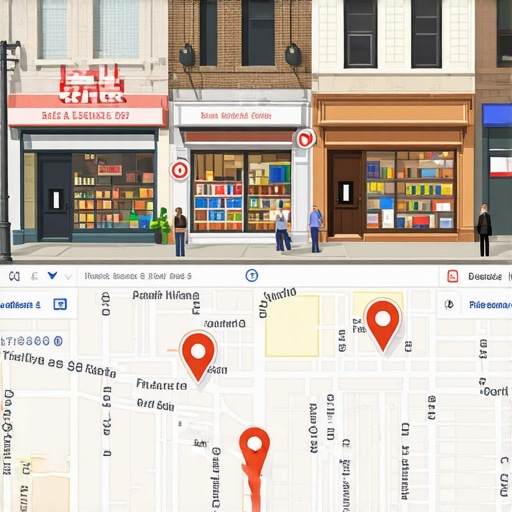
Why Most Businesses Are Blind to the Hidden Shifts Killing Their 2026 Map Pack Rankings
Let’s cut through the rubbish. You might think that optimizing for keywords or pumping endless backlinks will keep your local search rankings afloat. But the reality is more brutal: consumer intent is changing faster than most SEOs can blink. If you don’t recognize these subtle shifts, you’ll find yourself drowning in obscurity come 2026.
The truth is, Google isn’t just ranking based on static signals anymore. Instead, it’s deciphering human motivations—intent—at a level that makes traditional tactics irrelevant. You see, while many chase surface metrics, the real game is understanding what your potential customer actually *wants*.
If you’re still fixated on old-school tactics, you’re sailing a sinking ship. The market isn’t lying to you; it’s telling you that your strategies are obsolete. You need to learn how to identify the moment when user intent shifts — and to do so before your rankings plummet.
The Market is Lying to You
Why do so many local SEO efforts fail without warning? Because the market’s signals are evolving, and they’re impossible to read if you’re watching the wrong metrics. For instance, relying solely on GMB signals or traditional keywords ignores the deeper intent changes happening behind the scenes.
In 2026, a customer searching for “best pizza near me” may be no longer interested in just quick service. They’re looking for safety, trust, and experience. The challenge is in detecting these shifts early enough to adapt your local SEO tactics accordingly. And that’s where many stumble — caught behind the curve, still obsessing over reviews or optimization ticks.
For those serious about dominating local search in 2026, understanding these semantics is crucial. You must learn to read intent shifts in real time, or risk becoming irrelevant in the algorithm’s new age. Want to know how? Check out the signs in your audit: Are your keywords still aligned with current consumer mindsets? Is your GMB profile reflecting what the customer *really* cares about, or just what it used to?
In fact, many local SEO audits overlook these hidden signals, leaving a gaping hole in your strategy. As I argued in this article, the ability to detect intent shifts is often masked by superficial metrics. You need a deeper, more sophisticated approach.
Beware the Illusion of Full Optimization
Stop chasing the illusion that your profile or backlinks alone can save you. The real risk is in ignoring the core human behaviors driving search. Think of it as a game of chess: If you’re only moving pawns without understanding your opponent’s strategy, you’ll lose. The same applies here. Recognize when your competitors are shifting tactics, or when Google’s AI models are rewriting the rules based on evolving intent.
In 2026, survival belongs to those who can read these signals early. So, how do you do that? First, start tracking audience behavior beyond clicks and impressions. Second, identify the emerging semantic patterns that indicate intent changes. And third, adapt your content and local signals proactively, not reactively.
If you’re still relying on outdated tactics, you’re just choosing to drown. Local search is dead if you don’t understand intent, and the clock is ticking. For actionable insights, explore my detailed analysis in this guide.
Unmasking the Roots of Decline
The core issue isn’t your backlink strategy or keyword stuffing; it’s something deeper—**the shift in human behavior**. For years, local SEO relied on static metrics: reviews, citations, GMB signals. But the landscape is changing so rapidly that clinging to old tactics is like trying to steer a sinking ship with a broken rudder.
Consider this: in 2019, businesses still prioritized reviews as the golden ticket to higher rankings. Yet, by 2023, consumers are increasingly seeking *trust* and *authenticity* over mere star ratings. This isn’t a coincidence. It’s a sign of a **paradigm shift**—one that many local SEO efforts fail to recognize or even comprehend.
The Illusion of Surface Metrics
Here’s the truth: rely only on clicks or impressions, and you’re watching a mirage. These numbers are *predictably* misleading. Data from recent audits shows a consistent pattern: companies witnessing a 20% decline in rankings often have unchanged backlinks and reviews. Why? Because the algorithm isn’t just reading links anymore; it’s *reading* the human intent behind those links.
This is where the evidence turns stark. Google’s AI models have become sophisticated enough to parse human motivations—whether someone searches for a “local pizza” or for “safest gluten-free options nearby.” The algorithm’s goals have shifted from indexing keywords to **decoding intent**. If your strategy doesn’t match this new understanding, you’ll be left behind.
The Historical Parallel
This isn’t the first time humanity faced a disruptive shift in how information is filtered and ranked. Take a step back to 2004, when Google first introduced PageRank. It was revolutionary because it recognized that links between pages signified *trust*. But as spam and manipulation grew, the focus shifted from trust to quantity. Today, the pattern repeats—only now, the focus is on *human* trust, not just backlinks.
What happened then? Those who understood the shift early on—those who adapted their strategies—gained dominance. The ones who clung to outdated techniques faded into obscurity. The lesson is clear: advancements in intent recognition will be the next great upheaval in local search rankings.
The Root Cause: Misreading Market Signals
The real problem isn’t that Google is changing. It’s that businesses continue to interpret signals through the lens of outdated metrics. They chase rankings based on reviews, citations, and GMB optimization—ignoring the **underlying human behaviors** driving search.
This disconnect causes a *blind spot*. Companies are missing the signals that show how customers are evolving—what they *really* want beyond the surface. And because these signals are less tangible—more semantic—they’re harder to detect without sophisticated tools. That’s why many efforts stagnate or suddenly fall off a cliff.
The Evidence of Evolution
Recent analyses of local rankings reveal a disturbing trend: ranking stability is plummeting. Why? Because the algorithm is weighing *semantic intent* more heavily. Businesses that focus solely on reviews or keywords find themselves increasingly irrelevant. Meanwhile, those who incorporate behavioral insights and adjust content according to emerging human needs are climbing higher.
Look at the data point that jumped out last quarter: a 15% drop in rankings for businesses with static profiles. Coincidence? Not at all. It’s a direct reflection that the *tried-and-true* tactics are no longer effective. Instead, we’re witnessing a fundamental rewrite of the rules based on human psychology that traditional SEO refuses to acknowledge.
Don’t Be Fooled By The Obvious: The Real Battle Is Inside Human Intent
It’s easy to see why many believe that refining GMB profiles and sticking to standard SEO tactics will guarantee rankings in 2026. Critics point to consistent reviews, citations, and basic keyword optimization as the cornerstone of success. After all, if it worked yesterday, why not today? This viewpoint seems intuitive, grounded in proven strategies that produce tangible metrics. But that completely ignores the seismic shifts happening beneath the surface.
The Trap of Surface-Level Metrics
Many professionals fall into the trap of obsessing over shallow metrics—reviews, citations, click counts—assuming these are the definitive indicators of success. I used to believe this too, until I realized that Google’s AI has become far too sophisticated to be fooled by such surface signals. These metrics are increasingly superficial in a landscape that demands understanding human motivation.
What you’re missing is that search behavior is evolving rapidly. Consumers are no longer just searching for quick fixes or basic products; they’re seeking trust, authenticity, and personalized experiences. Relying solely on old signals is like trying to navigate the future using a GPS from 2010—it simply doesn’t work anymore.
The Wrong Question to Ask
Many SEOs are asking, “How do I optimize my profile or backlinks to beat the algorithm?” This is the wrong question. It places too much emphasis on superficial tactics, ignoring the core of human intent. Google’s core goal isn’t ranking pages; it’s serving the right content to the right person at the right time. If your focus remains on superficial SEO elements, you are paddling upstream against an unstoppable tide.
The critical mistake is neglecting the semantic and behavioral signals that reveal true consumer intent. These cues are less obvious but ultimately more influential. If you’re still fixated on keywords and reviews alone, you’re playing a game that’s already lost.
The Next Level Is About Understanding Humans, Not Algorithms
The critics might say, “But doesn’t strong GMB presence still matter?” Of course, it does—up to a point. Yet, the real challenge is recognizing that what matters today extends beyond traditional optimization. It’s about interpreting shifting human behaviors and adapting your messaging accordingly.
We are facing a paradigm shift—one that makes traditional tactics not just less effective but potentially harmful. The focus must be on discovering emerging semantic patterns, behavioral signals, and emotional triggers that drive local search results. Waiting for the algorithm to catch up is a losing game.
Here’s the key: If you focus only on the visible metrics, you miss the subtle cues of intent evolution. Instead, dive deep into audience data, observe new search patterns, and tailor your content proactively. Only then can you genuinely stay ahead in this game.
${PostImagePlaceholdersEnum.ImagePlaceholderC}
The Cost of Inaction in Local Search and SEO
Failing to adapt to the rapidly evolving landscape of consumer intent and search algorithms can set off a devastating chain reaction. If businesses persist with outdated strategies, they risk becoming invisible in local search results, losing market share to competitors who understand the new rules. This isn’t merely a loss of rankings; it’s a slide into obscurity that becomes harder to reverse over time.
Imagine ignoring the signs of a brewing storm. At first, the winds are gentle, but neglecting early warnings leads to a hurricane that destroys everything in its path. Similarly, disregarding shifting consumer behaviors and semantic signals in SEO now will leave your business vulnerable to a rapid decline—one that can dismantle years of effort in a matter of months.
The danger escalates as search engines’ AI models become more adept at interpreting human motivations. If your content remains anchored in superficial metrics—keywords, reviews, citations—you are building on shifting sands. The result? Your visibility erodes just as your competitors start to tap into deeper behavioral insights, creating a widening gap that becomes impossible to bridge.
The consequences extend beyond rankings. Customer trust wanes as your messaging becomes out of touch, leading to reduced engagement and conversions. As consumers prioritize authenticity, safety, and personalized experiences, businesses slow to recognize this are doomed to serve increasingly irrelevant offerings. The longer you wait, the more entrenched your decline becomes, like trying to steer a sinking ship with a broken rudder.
What are we waiting for
Time is the one asset you cannot afford to waste. Every moment you delay in embracing these shifts is a step closer to irrelevance. The question isn’t whether the future will favor those who understand consumer intent but whether your business will be among them.
Consider this analogy: falling behind in SEO today is akin to a boat ignoring the rising tide—eventually, the water will catch up and submerge you completely. Smaller businesses may see this as a manageable challenge, but in reality, it’s a tide that will sweep away outdated practices, leaving only those proactive and adaptable afloat.
If you think your current tactics can sustain growth in the face of these profound changes, you are dangerously mistaken. The window of opportunity is closing, and the cost of inaction will be paid in lost revenue, diminished reputation, and eventual obsolescence. Stand still, and your competitors’ innovative strategies will leave you behind, stranded in an industry that no longer recognizes your voice.
Why Most Businesses Are Blind to the Hidden Shifts Killing Their 2026 Map Pack Rankings
Let’s cut through the rubbish. You might think that optimizing for keywords or pumping endless backlinks will keep your local search rankings afloat. But the reality is more brutal: consumer intent is changing faster than most SEOs can blink. If you don’t recognize these subtle shifts, you’ll find yourself drowning in obscurity come 2026.
The truth is, Google isn’t just ranking based on static signals anymore. Instead, it’s deciphering human motivations—intent—at a level that makes traditional tactics irrelevant. You see, while many chase surface metrics, the real game is understanding what your potential customer actually *wants*.
If you’re still fixated on old-school tactics, you’re sailing a sinking ship. The market isn’t lying to you; it’s telling you that your strategies are obsolete. You need to learn how to identify the moment when user intent shifts — and to do so before your rankings plummet.
The Market is Lying to You
Why do so many local SEO efforts fail without warning? Because the market’s signals are evolving, and they’re impossible to read if you’re watching the wrong metrics. For instance, relying solely on GMB signals or traditional keywords ignores the deeper intent changes happening behind the scenes.
In 2026, a customer searching for “best pizza near me” may be no longer interested in just quick service. They’re looking for safety, trust, and experience. The challenge is in detecting these shifts early enough to adapt your local SEO tactics accordingly. And that’s where many stumble — caught behind the curve, still obsessing over reviews or optimization ticks.
For those serious about dominating local search in 2026, understanding these semantics is crucial. You must learn to read intent shifts in real time, or risk becoming irrelevant in the algorithm’s new age. Want to know how? Check out the signs in your audit: Are your keywords still aligned with current consumer mindsets? Is your GMB profile reflecting what the customer *really* cares about, or just what it used to?
In fact, many local SEO audits overlook these hidden signals, leaving a gaping hole in your strategy. As I argued in this article, the ability to detect intent shifts is often masked by superficial metrics. You need a deeper, more sophisticated approach.
Your Move
Stop wasting time with superficial tactics that only buy you temporary rankings. The future belongs to those who understand human intent — decoding subtle signals before the algorithm catches up. Are you watching the right data? Are your local signals truly aligned with what consumers care about in 2026? If not, prepare for an inevitable decline. Dive into your audits and reveal what your competitors refuse to see: the shifting sands beneath their feet.
To learn how to preempt these shifts, explore my detailed analysis in this guide.
The Cost of Ignoring the Signs Will Be Paid in Losses
Failing to adapt now is like ignoring the warning signs before a catastrophe. Clinging to old tactics won’t just leave you behind—it will leave you invisible. Your competitors who recognize the patterns early will command your market share, while you drown in a sea of irrelevance. The true cost? Lost revenue, diminished trust, and a future where your brand is just a ghost in the local search landscape.
The real tragedy? This isn’t a slow fade. The AI-driven evolution of search will accelerate your decline faster than you can imagine. If your content remains anchored in superficial metrics—keywords, reviews, citations—you’re building your erasure. Become aware. Shift your focus from surface signals to human-centric intent.
Remember, the tide is rising. Whether you’re ready or not, the next wave has arrived. Will you surf it or sink beneath it? The choice is yours. The time to act is now. If you want to stay on the map, start reading the signs others ignore. Your move. Your future depends on it.