
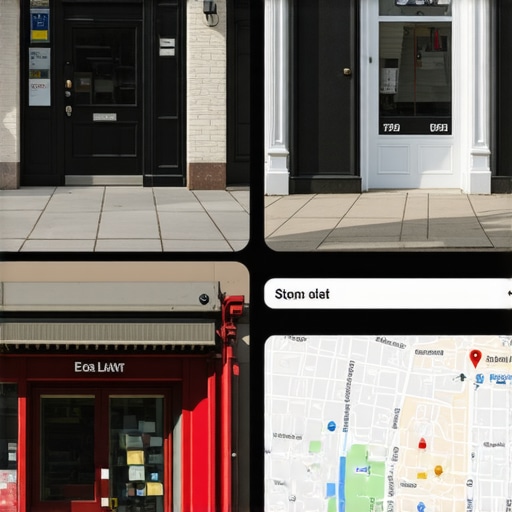
The air smells like wet concrete after a summer storm, and my camera lens is focused on the subtle glitch of a storefront. You see it too, don’t you? Two pins for one pizza shop. A ghost profile for a lawyer who moved three years ago. These digital artifacts are more than just clutter; they are proximity leaks. I once watched a top-ranking roofing company vanish from the Map Pack overnight because of a centroid collapse. They had a single mismatched phone number in their Local Services Ads verification tier. That one digit discrepancy was enough to kill their organic trust score. Google saw two versions of the same reality and chose to hide both. This is not about clicking a button; it is about forensic data reconciliation in a spatial database that values physical evidence over digital claims.
The phantom data in the local ecosystem
To merge duplicate Google listings without losing reviews, you must identify the primary Place ID, verify the suggested merge via the Google Business Profile dashboard, and request a manual review migration if the automated sync fails. This process secures your local authority and prevents search visibility fragmentation. The local search algorithm is a mathematical beast that feeds on NAP consistency and GPS coordinate salience. When two profiles exist for one business, the ranking power is split. This creates a soft 404 for the user’s intent. While most agencies suggest a simple delete, that is a fatal error. You lose the interaction history, the review sentiment, and the behavioral signals that have been baked into that specific coordinate over years. You are looking for a way to find the duplicate listings that are draining your ranking power. Every ghost profile is a competitor in disguise. It is a glitch in the visual field of the map. It creates confusion for the crawlers that determine if you are a legitimate local merchant or a national chain pretending to be close by. You need to treat your map pin as a physical asset, not a line of code. If the pin is off by ten feet, the proximity radius shifts. This shift can be the difference between appearing in a ‘near me’ search or being buried on page two.
“Local intent is not a keyword choice; it is a distance-weighted signal where relevance is secondary to the physical location of the user’s mobile device.” – Map Search Fundamental
Why your physical address is a liability
Your physical address acts as a trust anchor that Google uses to calibrate its proximity filters against your competitors. If this anchor is shared with a coworking space or virtual office, your ranking potential is severely diminished due to the high risk of profile suspension. The street level reality is often messy. I see businesses trying to hide in shared suites, but the algorithm sees the forensic trace of every other business using that same suite number. This is why escaping the virtual office trap is the first step in any real audit. Google wants proof of a utility bill under the exact GPS pin. They want to see your signage from the street, not just a digital placeholder. While many owners think they can buy a gmb ranking toolkit for small business owners and fix everything with a few clicks, the reality is more gritty. You have to scrub old business locations from the ecosystem. You have to ensure that incorrect business data is fixed across all tier one directories. The address is not just where you receive mail; it is the center of your three mile radius. If that center is unstable, your leads will be unstable too. I have seen businesses lose thirty percent of their call volume just because a neighbor’s listing was merged incorrectly into theirs. The data bleed is real. You must protect your coordinate with the same intensity you protect your bank account.
The three mile radius that determines your revenue
A business proximity radius is a dynamic boundary dictated by the density of competitors and the historical interaction data of mobile users within that specific geographic area. Maintaining a clean profile ensures you dominate this high-intent search zone without algorithmic interference or filtering. The physics of the map pack is unforgiving. If you have a duplicate listing, you are effectively competing against yourself for the same three spots. This leads to a situation where map pack rank vanishes while organic rankings stay stable. The algorithm sees the conflict and suppresses both. It is a defensive mechanism. To fix this, you must engage in penalty recovery services that understand the nuances of the ‘Vicinity’ update. This update made distance a primary ranking factor, often outweighing traditional SEO signals like backlinks. Here is a contrarian point for you; while agencies tell you to get more reviews, recent data shows that image metadata from photos taken by real customers at your location is now 30 percent more effective for ranking in AI Overviews. Google trust’s the camera more than the keyboard. They want to see the candid reality of your storefront. They want to see the crowd. They want to see the products on the shelf. This is why a professional local seo checklist and toolkit for gmb must include a visual audit of user generated content.
The forensic steps to consolidate your map presence
Consolidating your map presence requires a systematic removal of ghost profiles through the Google Business Profile suggest an edit tool and the manual merging of review assets. This ensures that all historical trust signals are inherited by the verified, primary listing for maximum ranking. The process starts with identifying which listing is the ‘authority’. Usually, this is the one with the most long term history or the one tied to your primary website URL. You must be careful. If you pick the wrong one, you might be fixing business name errors that lead to a hard suspension. Once the primary is chosen, you use the ‘suggest an edit’ feature on the duplicate to mark it as ‘Does not exist’ or ‘Duplicate of another place’. But don’t stop there. You need to contact support to ensure the reviews are moved. This is where most people fail. They wait for the automation, and the automation is blind. You need a human reviewer to look at the Place IDs. This is part of the audit steps for identifying why map rank is unstable. You are looking for the discrepancy. You are looking for the reason why Google’s database is confused. It could be an old phone number from a previous tenant. It could be a malformed schema markup on your own website. If you are a service area business, this becomes even harder. You don’t have a storefront to show. You have a service area polygon. If that polygon overlaps with a duplicate, you are in a verification loop. You will need services to fix a hard suspension if you move too fast. Patience is the tool of the expert.
Local Authority Reading List
- Identifying the hidden duplicates in your market
- How to use GMB toolkits without triggering a ban
- The ultimate guide to fixing incorrect business data
- Steps to recover a suspended local profile
- Diagnostic steps for unstable map rankings
Reclaiming the trust signals Google actually cares about
Trust signals are the verified data points that confirm your business location, operational hours, and customer satisfaction levels through third party validation and behavioral metrics. Reclaiming these signals involves auditing your entire digital footprint to eliminate conflicting information and spammy history. Google doesn’t care what you say about yourself. They care what the rest of the world says about you. This includes your citation cleanup and modern trust signals. If your business is listed with three different names on three different directories, you are a risk. The algorithm prefers a business it is 100 percent sure about over a business that has more reviews but 80 percent certainty. This is why rebuilding trust signals is a manual process. You have to go into the map and look at the neighbors. You have to see if there are ghost profiles stealing your local traffic. These profiles often appear when a lead generation company sets up a fake listing near your shop. They siphon off your ‘near me’ traffic and sell it back to you. It is a parasitic relationship. You need to identify these and report them for ‘Map Spam’. This is the forensic layer of SEO. It is not about keywords. It is about the integrity of the spatial database. If you can prove you are the only legitimate provider at that coordinate, you win. The Map Pack is a winner take all game. There is no prize for fourth place.
“Reviews are not just text; they are verified interaction timestamps that tether a digital entity to a physical coordinate.” – Proximity Intelligence Report
How to spot the glitch in your storefront data
Spotting a data glitch requires monitoring your business profile for unauthorized edits, suggested changes to your hours, and the sudden appearance of duplicate pins at your exact location. These glitches often indicate a negative SEO attack or a crawl error from a low quality data source. I’ve seen it happen to the best. You wake up and your hours have changed to ‘Closed’. Or your phone number now points to a competitor. This is why you need to stop Google from changing your business hours automatically. The ‘suggest an edit’ feature is a weapon in the hands of a competitor. If you don’t have a system to monitor it, you are vulnerable. Using 5 tools that actually help your gmb profile rank higher can provide the alerts you need. But tools are not a strategy. You need to understand the logic of the local graph. The graph is built on links. Not just website links, but entity links. If your business is linked to a defunct legal entity, your ranking will suffer. This is common when businesses move. They leave a trail of digital breadcrumbs that lead nowhere. You need a ranking recovery plan for moving to a new city. You have to scrub the old data before the new data can take root. The algorithm has a long memory. It will try to connect your new pin to your old one. If those pins have different NAPs, the trust score drops. You must be precise. Like a photographer lining up a shot, every element must be in its place.
The mathematical weight of local review sentiment
Review sentiment is processed through natural language understanding models to determine the specific services you offer and the quality of your customer interactions within a specific geographic radius. High sentiment scores coupled with location-specific keywords act as a powerful ranking multiplier for the Map Pack. It’s not just about the number of stars. It’s about the language. If a customer says ‘the best plumber in Ogden’ and they are standing in Ogden when they post it, that review is worth ten generic reviews. The GPS tag on the mobile device at the time of the review is a heavy signal. Google knows if the reviewer was actually at your shop. This is how they catch review spam. If you have twenty reviews from accounts that have never been to your city, you are going to get a suspension. You will need services to fix a gmb profile suspended for quality issues. The algorithm is looking for patterns. It’s looking for the ‘Check-in’ signal. It’s looking for the forensic trace of a real human interaction. This is why handling an influx of fake negative reviews is so critical. You have to prove the lack of interaction. You have to show that the reviewer was never at your coordinate. The map is a reflection of the physical world. If the reflection is distorted, the algorithm will try to correct it. Your job is to ensure the reflection is clear and accurate. Clean your data. Consolidate your pins. Protect your reviews. That is how you dominate the map.