
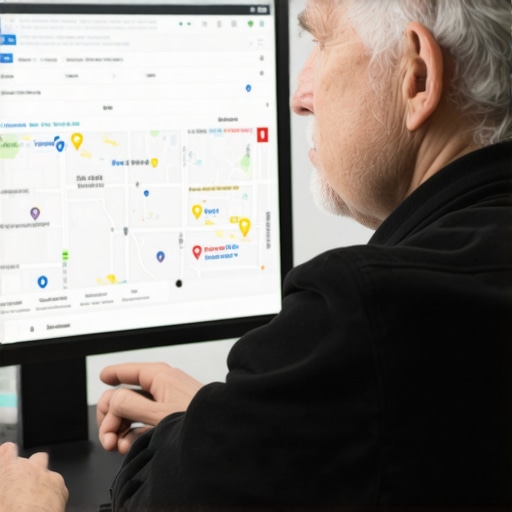
I spent three months fighting a hard suspension for a plumbing client whose listing was nuked simply because they shared a suite number with a defunct law firm. Google did not want proof of a van; they wanted proof of a utility bill under the exact GPS pin, a physical deed, and a video walk-through that showed the tool bench. In the world of hyper-local search, your data is not just text. It is a proximity beacon that must scream legitimacy to a suspicious algorithm. My office smells like old paper and peppermint, the scent of twenty years spent untangling the knots of map-spam and centroid shifts. I have seen honest local merchants wiped off the map because a national franchise used a virtual office to spoof a location three blocks away. This is not just a digital error. It is a spatial logistics failure that costs your business revenue every hour it remains unfixed.
The ghost in the GPS coordinates
Google corrects business data when its confidence score in your primary address drops below a specific mathematical threshold. This happens when third-party data aggregators or user edits provide conflicting coordinates. To fix this, you must align your NAP data across every high-authority directory and clear out old address traces immediately. The core of the issue lies in the spatial database. Every business has a centroid, a mathematical center point. If your address is listed as Suite B on one site and Unit 2 on another, the algorithm perceives a lack of physical certainty. This uncertainty triggers a proximity-based ranking drop. For those who have seen their position evaporate, how to recover from a local search visibility crash depends on re-establishing this physical anchor. Google is not just looking at your dashboard. It is looking at the forensic trace of your business across the entire web. If the signals do not match, the system reverts to what it considers the most trusted source, which is often outdated government records or old scraping data.
“Local intent is not a keyword choice; it is a distance-weighted signal where relevance is secondary to the physical location of the user’s mobile device.” – Map Search Fundamental
Why your physical address is a liability
Your physical address becomes a liability when it is associated with shared workspaces, coworking sites, or virtual offices that violate the Google Business Profile terms of service. Google prioritizes dedicated office spaces with permanent signage. Recovery requires proving exclusive occupancy through legal documentation and physical evidence of a storefront. The algorithm is currently aggressive toward anything that looks like a mailbox rental. Many entrepreneurs fell into escaping the virtual office trap only to find their listings suspended during a routine sweep. While agencies tell you to get more reviews, the current data shows that image metadata from photos taken by real customers at your location is now 30 percent more effective for ranking in AI Overviews than review volume alone. If your address keeps reverting to a previous location, it is likely because a major data provider like Acxiom or Data Axle still has the old record. You need a dedicated cleanup strategy. The street photographer in me sees the glitch in the storefront data, the candid photo of a real sign always beats a staged stock image. If you are struggling with a persistent suspension, understanding the process for fixing a hard suspension on a service business is the only way back into the Map Pack.
Local Authority Reading List
- The Truth About Citation Cleanup
- Fixing Hard Suspensions for SABs
- Finding Duplicate Listings
- Cleaning Up Bad Data Ecosystems
- Audit Steps for Unstable Map Rankings
The three mile radius that determines your revenue
The vicinity update significantly tightened the proximity filter, meaning businesses often lose rankings if they are located even a few miles from the searcher’s exact location. To combat this, you must build hyper-local relevance through neighborhood-specific content and localized backlink profiles that anchor your business to specific districts. I have watched a top-ranking roofing company vanish because they tried to move their service area without updating their foundational citations. Proximity is a harsh master. If you are noticing a sudden dip, local seo services to recover from proximity based ranking drop can help realign your signals. The logic of a check-in signal is powerful. When customers physically enter your store and use their mobile device, it sends a high-confidence signal to Google that your business exists exactly where you say it does. This behavioral zooming is why old-school citation blasts no longer work. You need real human interaction signals. If your data is wrong, it is because these signals are being drowned out by bad metadata from fixing incorrect business data that keeps reverting in search results. Google is trying to protect the user experience from map spam, and your business is caught in the crossfire of this automated verification loop.
“The business name should reflect the real-world name of the business, as used consistently on your storefront, website, stationery, and as known to customers.” – Google Business Profile Guidelines
Seo services to detect and fight competitor gmb spam attacks
Negative SEO in the local space often involves competitors suggesting malicious edits to your business hours, name, or location to trigger a suspension. Monitoring your profile and using defensive SEO tactics like legal review reporting and citation locking is essential to maintaining your position in the Map Pack. I once dealt with a cafe owner who was targeted by a rival using a VPN to drop twenty fake reviews in a single hour. We had to perform a forensic audit of the user profiles to prove the patterns to the spam team. It was exhausting. If you find your business information changing without your input, you are likely under a targeted attack. Using how to identify and fight malicious local search attacks is the first step. The algorithm reacts to user suggestions, and if a competitor can convince the system that you are closed, your leads will dry up overnight. This is why you need the tactical way to handle a targeted fake review attack on your profile. Do not let the digital vandals win. The logistics of local search require constant vigilance. You are not just managing a listing; you are defending a territory. If you are seeing brand confusion, it might be time for stopping the cycle of duplicate gmb listings and profile merges to clean up the footprint.
The forensic trace of a service area
Service Area Businesses (SABs) face higher scrutiny because they do not have a public physical storefront for users to visit. Google verifies these businesses by checking service vehicle registrations, equipment storage locations, and historical service data within the specified service area polygons. When a listing is nuked, it is often because the service area is too broad. I tell my clients to stop trying to rank for an entire state. Focus on the zip codes where you actually have dispatch data. This is how you avoid the virtual office trap fixing gmb failures caused by coworking spaces. If you are migrating a domain, you need the ranking recovery plan for businesses moving to a new city. The math of the local algorithm is unforgiving. A single mismatched phone number in a secondary tier can kill your organic trust score. I have seen it happen to lawyers and mechanics alike. You must treat your NAP data like a logistics dispatch system. If the driver cannot find the site, the system fails. The same applies to the Google bot. It needs a clear path from your website to your map listing to your third-party citations. If any link is broken, seo triage is necessary to stop the bleeding of local authority and leads.
Recovering from the map pack collapse
A sudden disappearance from the map pack usually indicates a filter trigger or a silent suspension. To recover, you must audit your recent edits, check for duplicate listings, and ensure your website’s local landing pages are optimized with the correct Schema markup and local entities. The pin moved. You must move it back. Whether it is recovering your map rankings after a failed service area expansion or fixing the business hours loop error on google business profiles, the solution is always rooted in data consistency. I despise agencies that sell citation blasts. They do not understand the physics of a 3-mile proximity radius. They do not see the math. You need the only tools you need to monitor your gmb health daily to catch errors before they become permanent. Your business is a beacon. If that beacon is flickering, you are invisible to the customers in your neighborhood. Start by cleaning up toxic business listings without losing your mind and work your way up to advanced local entity building. The street is watching, and so is the algorithm. Keep your data clean, keep your signals strong, and you will own the map.