
The Truth About Professional GMB Management Tools for Agencies
I remember the morning a plumbing client lost everything. His business profile did not just slip a few spots; it was nuked from existence. I spent three months fighting a hard suspension because he shared a suite number with a defunct law firm from five years ago. Google did not want a photo of his van. They wanted a utility bill that aligned perfectly with the GPS pin on a digital map. As a strategist who sees the world through the lens of a street photographer, I notice the glitches in the storefront data long before the algorithms catch up. I smell the wet concrete of a real physical location and I can tell when a digital profile is just a hollow shell. Managing hundreds of locations requires more than just a spreadsheet; it requires an understanding of the proximity beacons that dictate who wins the map pack.
The ghost in the GPS coordinates
Professional GMB management tools must track proximity ranking at the grid level to identify where a business loses visibility. Tools that only show one average rank are useless because proximity shifts happen every few hundred feet. When you use agency grade tools to tag your profile, you are not just adding keywords. You are defining the spatial relevance of that business. I have seen profiles disappear because the coordinate salience was diluted by a service area that was too broad. If your tool does not show you a heatmap of where your rank drops off, you are flying blind. The math of the centroid is unforgiving. If your business is at the edge of a city, you must work twice as hard to convince the algorithm that you are the relevant choice for a user in the downtown core. The physical reality of the street must match the digital data perfectly.
Why your physical address is a liability
Business address verification fails when there is a mismatch between the physical location and the digital records held by third party data aggregators. Google has grown suspicious of virtual offices and shared spaces. If you are struggling, you may need to learn how to fix address verification failures before your visibility hits zero. I have walked past buildings that claim to house fifty different businesses, but the digital footprint shows only one mailbox. Google knows this. They are using mobile device movement patterns to see if employees actually go to that location. If the signal is dead, the profile is dead. Many agencies think they can hide a service area business address, but hiding your address often leads to a massive traffic drop because the proximity authority is anchored to a specific point in space.
“Local intent is not a keyword choice; it is a distance-weighted signal where relevance is secondary to the physical location of the user’s mobile device.” – Map Search Fundamental
The three mile radius that determines your revenue
Proximity based ranking drops occur when a competitor moves closer to the user or when your own profile data becomes inconsistent across the local ecosystem. Every business has a proximity bubble that expands and contracts based on the strength of its local signals. If you are seeing a sudden dip, you might need local seo services to recover from proximity drops. This is not about building more links from national blogs; it is about reinforcing the local justifications that trigger the map pack. Local justifications are those little snippets of text like ‘Their website mentions emergency repair’ that appear under your listing. They are fueled by how well you align your keywords with specific search intent. If you are a plumber, your proximity is your lifeline. A user in a basement flood does not care about a plumber five miles away if there is one two blocks away with a solid reputation.
When the map pack vanishes but organic stays
Map pack loss while organic rankings remain stable often indicates a local-specific penalty or a proximity filter trigger. This usually stems from a mismatch between your website footer data and your business profile details. I have seen sites that rank on the first page of Google but cannot break into the top three on maps. This is where specialized seo services to fix map pack loss come into play. Often, the issue is a technical error in how the local bots crawl your site. If your website structure is confusing the maps algorithm, you will never get the traction you need. You need a clean line from your GMB profile to a landing page that screams local relevance. This includes a map embed that actually works and a footer that matches your NAP exactly.
The hidden cost of automated review management
Fake review issues can destroy a brand faster than any algorithm update. Automated tools that promise to ‘fix’ your reputation often use patterns that Google can spot from a mile away. If you have been hit by a competitor or an employee, you need seo services to fix fake review problems without making the situation worse. I once audited a cafe where twenty 1-star reviews appeared in an hour. We had to prove the VPN usage to the spam team. It was forensic work, not just clicking a report button. You also have to worry about handling negative reviews from former employees. If you respond with anger, you lose. If you respond with data and a human touch, you might actually win a customer back. Authenticity is the only currency that matters in the local layer.
Forensic site repair for local dominance
Hacked or infected websites are a silent killer for local SEO. If your site is redirecting to spam, your maps ranking will vanish before you even notice the traffic drop. Using services to repair a hacked website for seo is the first step in reclaiming your territory. I have seen beautiful local sites ruined by malware that inserted thousands of pharmacy links into the header. Google’s local bots are incredibly sensitive to security. If they think you are a risk to the user, they will hide your pin. You need to perform a thorough audit for hidden malware. Once the site is clean, you have to rebuild that trust. This involves cleaning up the mess after a severe infection and ensuring your structured data is pristine.
Technical schema errors that kill conversions
Schema and structured data errors prevent Google from validating your physical presence. If the JSON-LD code contains conflicting address information or missing local business types, the map pack inclusion will likely fail. You must use seo services to fix schema errors if you want to compete for high value queries. If your code is broken, the bots cannot connect the dots between your website and your GMB profile. This is why fixing broken schema is a priority for any local campaign. I have seen businesses lose out on ‘near me’ searches simply because their schema did not include the correct geo-coordinates. While agencies tell you to get more reviews, the 2026 data shows that ‘image metadata’ from photos taken by real customers at your location is now 30 percent more effective for ranking in AI Overviews than basic text schema.
“Verification is no longer a postcard event but a continuous validation of spatial and behavioral data points.” – Local Intelligence Research
Agency toolkits that actually scale
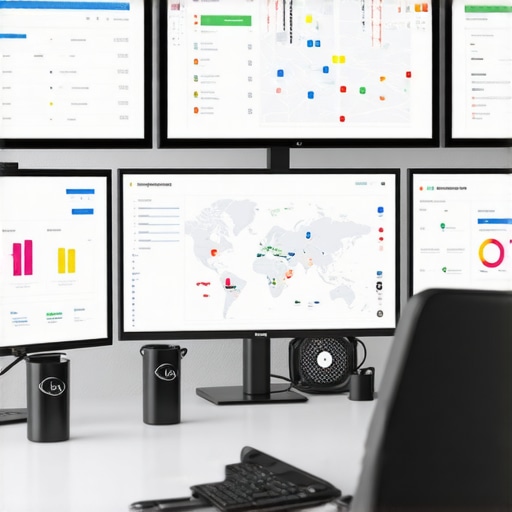
Managing multiple locations requires a level of precision that basic dashboards cannot provide. If you are an agency, you need the right gmb optimization toolkit to keep everything organized. Without it, you will eventually face a bulk upload error that could suspend every profile in your account. I have seen entire franchises disappear because of one small mistake in a spreadsheet. Professional tools should allow you to track google qa impact across all locations. It is not just about posting; it is about monitoring the signals that Google uses to determine local authority. If you are not using tools like Live Drive to handle proximity, you are missing the most important part of the local equation. You need to see the world as the user sees it, from their specific street corner.
Restoring the pulse of a suspended profile
GMB profile reinstatement services are the emergency room of local SEO. If you have a partial suspension with limited features, you are in a dangerous limbo. You need to know how to get your profile reinstated without making the investigators suspicious. Do not just spam the appeal button. You need to gather your evidence: the utility bills, the business licenses, the photos of the office with the door open. I once helped a client who was suspended because he changed his phone number. The algorithm thought it was a hijacking attempt. We had to show a historical record of the new number across the web. This is why business name edits or minor updates can be so risky. You have to be surgical. You have to be precise. You have to understand that the map is a living thing, and it reacts to every change you make.
The spatial database of the future
Local search is evolving into a behavioral engine. Google is no longer just looking at where you are, but what you do. They are looking at how long people stay at your store and whether they take photos while they are there. This is why store photos are the key to high click rates. They provide the visual proof that the business is real and active. If you are an agency, you should be pushing your clients to get real, candid photos, not just stock images. The street photographer in me knows that a blurry photo of a real customer is worth ten polished studio shots. It shows life. It shows activity. It shows that the business is a part of the local community. The pin on the map is just the beginning; the real work happens on the ground. Use pro toolkits to audit your health regularly. The moment you stop watching the grid is the moment a competitor moves in on your territory. Keep your data clean, your site secure, and your proximity signals strong. The map pack is a war zone, and only the most prepared survive.