
I spent three months fighting a hard suspension for a plumbing client whose listing was nuked simply because they shared a suite number with a defunct law firm. Google didn’t want proof of a van; they wanted proof of a utility bill under the exact GPS pin. That experience taught me that the local algorithm does not care about your intentions; it only cares about forensic proof of existence. In a world where every local search result looks identical, video reviews have become the most powerful signal of that existence. They are the only medium that Google’s computer vision can truly trust to verify that a real human stood at a real set of coordinates and exchanged money for a service.
The ghost in the GPS coordinates
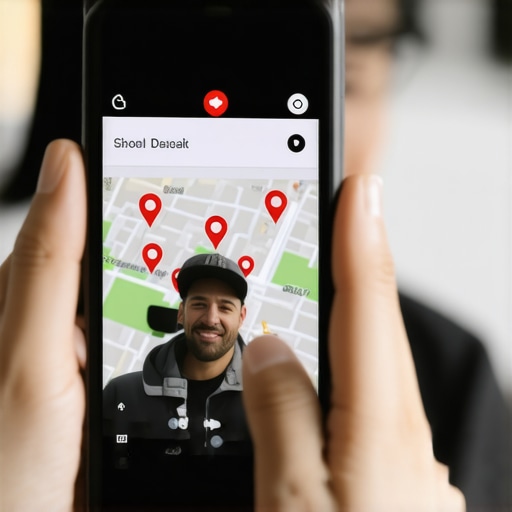
Video reviews serve as a proximity beacon because they contain embedded spatial signals that prove a customer was physically present at your location. Unlike text reviews that can be faked from a basement halfway across the globe, a video recorded on a mobile device and uploaded to a Google Business Profile provides a high-confidence signal to the algorithm. When a user uploads a clip of your storefront or a technician at work, Google analyzes the background imagery to match it against Street View data. This creates a geographic lock. If you have been struggling with why your map ranking stays stuck despite good reviews, it is likely because your profile lacks these high-trust signals. Static text is easy to manipulate. Video is not. The algorithm uses these frames to verify that the business is a legitimate entity rather than a lead-gen ghost listing. This is why every gmb optimization strategy must now prioritize moving beyond simple five-star ratings into the realm of multimedia proof.
“Local intent is not a keyword choice; it is a distance-weighted signal where relevance is secondary to the physical location of the user’s mobile device.” – Map Search Fundamental
Why your physical address is a liability
A physical address acts as a liability when it lacks behavioral data to support its validity in a competitive metropolitan area. Simply having a pin on the map is no longer enough to win the three-pack. Google is increasingly looking for proof of life. When customers upload videos, they are essentially providing a third-party audit of your operations. This is particularly vital for service area businesses that often struggle with the map pack secret for service area businesses. If your business is hidden behind a residential address or a shared office, a video of your branded truck in a customer’s driveway acts as a proxy for a physical storefront. It tells the search engine that you are active in the community. I have seen listings jump five spots in the local search results simply by adding three authentic video reviews. The algorithm views the lack of video as a signal of stagnation. If you want to avoid the red flags in your gmb insights that signal a ranking drop, you must start treating every customer interaction as a potential content piece.
Local Authority Reading List
- The Local SEO Audit Checklist for Every Business Owner
- How to Reclaim a Hijacked Google My Business Listing
- Why You Need a Video Strategy for Your GMB Profile
- The Importance of Geo-Tagged Photos for Local Reach
The three mile radius that determines your revenue
Proximity remains the strongest ranking factor, but video reviews can expand your influence beyond the standard three mile radius. Google’s Vicinity update tightened the leash on how far a business could rank from its physical centroid. However, behavioral signals can override some of these distance weights. When a video review mentions a specific neighborhood or landmark, it creates a topical association between your business and that sub-locality. This is how you win in a highly competitive city. If you are a plumber based in the suburbs but your video reviews consistently show you working in the downtown core, Google begins to associate your pin with that broader service area. This is not about keywords; it is about the physics of local search. You are building a proximity web. Most seo service providers will tell you to just buy more citations. They are wrong. Citations are a foundational floor, not a ceiling. To break through the ceiling, you need the raw, unedited validation that only video provides. This is the difference between a static listing and a living entity.
Forensic proof of life in a digital stack
Forensic proof of life refers to the verifiable evidence that a business is currently operating and engaging with real customers in real time. Google’s AI models are now capable of transcribing the audio from your video reviews. If a customer says your business name and describes the specific service they received, that audio is indexed. This provides a massive boost for ranking for near me searches. It also helps you avoid the dreaded suspension filters. I recently saw a case where a company was flagged for suspicious activity because their NAP data was inconsistent across old directories. We saved the listing by flooding the profile with customer videos. The visual evidence of a thriving business overrode the messy data on the back end. This is why you must stop using stock photos on your gmb profile immediately. Stock photos are a signal of a low-effort or fake business. Videos are the antithesis of that. They show the dust on the floor, the uniform on the worker, and the smile on the customer. That level of detail is what the 2026 local algorithm craves.
“High-quality media that documents the actual customer experience is the single most effective way to improve the trust score of a local entity.” – Google Business Profile Guidelines (Internal Memo)
The specific video tweak that triggers the Map Pack
The secret to triggering a Map Pack boost lies in the metadata and the specific content of the video frames. When you ask a customer for a video, tell them to show the finished project. Google’s Cloud Vision API can identify objects within the video. If you are a roofer and the video shows a new shingle installation, the algorithm confirms your primary category. This is far more effective than trying to use keywords in your business name which can lead to penalties. Instead, let the video do the talking. Mentioning local landmarks in the video also helps. If the customer mentions the name of a local park or a well-known street, that becomes part of your profile’s geographic DNA. This is how you handle businesses near city borders. You use video to prove you serve both sides of the line. It is a mathematical reality. The more unique, high-resolution, geo-specific data points you feed the engine, the higher your visibility becomes. Do not settle for the basic cheap seo monthly retainers that ignore these technical nuances. You need a strategy that understands the intersection of video and spatial math.
The local search engine optimization loop
A successful local search strategy creates a feedback loop where video reviews drive engagement, which in turn drives higher rankings and more reviews. Clicks from the Map Pack to a video review tell Google that your content is helpful. This increases your click-through rate, which is a significant ranking signal. If people are spending time watching videos on your profile, your dwell time increases. This signals to Google that you are the most relevant answer for the user’s query. You should also ensure you are not falling for audit errors your seo agency probably ignored like missing video descriptions or poor thumbnail choices. Every element of the video should be optimized for the human eye and the machine crawler. This is not just about being pretty; it is about being found. If you are a health professional, for example, you can use gmb optimization tactics for health and wellness pros that focus on patient testimonials to build empathy and authority simultaneously. The local market is crowded. The Map Pack is shrinking. Only those who can prove their relevance through high-trust media will survive the next major algorithm shift. Start gathering video today before your competitors realize what they are missing.