
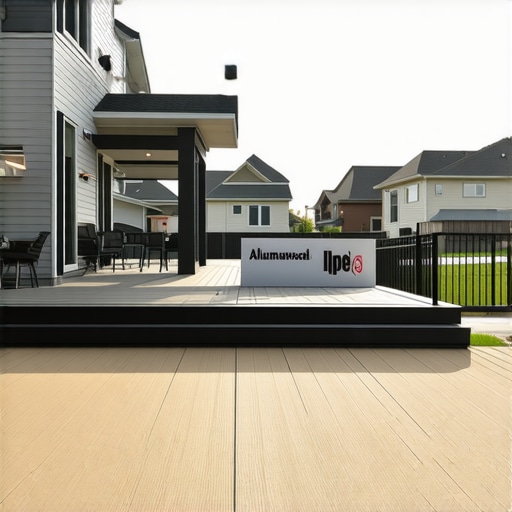
Why Your Ipe and Alumawood Projects Aren’t Showing Up in Local Search
Imagine this: You’ve just wrapped up a flagship project. It’s a 300-square-foot masterpiece featuring premium Ipe hardwood decking, custom-integrated LED lighting, and a modern Alumawood shade structure. The craftsmanship is flawless, the client is ecstatic, and the photos are portfolio-ready. You wait for the phone to ring with similar high-end inquiries, but instead, your digital presence remains quiet. When you search for “patio contractors” or “deck and patio builders” in your service area, your business is nowhere to be found on the first page of Google Maps.
As the COO of Renaissance Patio Products, I have spent years at the intersection of high-end manufacturing and the consumer-to-contractor journey. I’ve seen firsthand that the “Visibility Gap” – the distance between world-class craftsmanship and digital discoverability – is the single biggest growth killer for outdoor living professionals. You aren’t just competing against the guy down the street; you are competing against an algorithm that doesn’t know the difference between a pressure-treated pine deck and a luxury patio renovation unless you tell it in a language it understands.
If your high-margin projects involving premium materials like Ipe and Alumawood aren’t showing up in local search, it’s not because there isn’t demand. It’s because your digital strategy is failing to bridge the gap between material specificity and local intent. In this diagnostic guide, we will break down exactly why your premium projects are invisible and how to fix your local SEO to dominate the Map Pack.
Section 1: The Specificity Trap – Why “Deck Builder” Isn’t Enough
Many contractors fall into the trap of optimizing for the broadest possible terms. While “deck builder” or “landscaper” has high search volume, these terms are often too generic to capture the high-intent customer looking for a specific aesthetic or material. When a homeowner decides they want an enclosed patio or a sophisticated patio and pergola combination, their search behavior shifts from general to specific.
High-end clients don’t just want a “patio”; they want a specific lifestyle solution. If your Google Business Profile and website only mention general services, you are missing out on the “Materials Near Me” battle. For example, in high-demand markets like San Diego or South Florida, the term “Alumawood” carries significant weight. Searchers looking for this specific brand of aluminum patio cover are far further down the sales funnel than someone searching for “shade ideas.” They have done their research, they know the brand, and they are looking for a qualified deck and patio contractor to install it.
If your digital content doesn’t explicitly mention these materials, Google’s local algorithm won’t associate your business with those high-intent queries. This is a primary reason Why Your Decking Business Is Losing the ‘Materials Near Me’ Map Pack Battle. To win, your local SEO must reflect the specific inventory and expertise you bring to the table, moving beyond generic categories into material-driven authority.
Section 2: Material-Driven SEO – Ipe vs. Trex
In the world of outdoor living, the materials you use define your brand’s “price floor.” Homeowners searching for Ipe are in a different economic bracket than those looking for entry-level pressure-treated wood. Ipe, a dense Brazilian hardwood, is a “status” material. It is fire-resistant, incredibly durable, and requires a high level of technical skill to install – factors that should be highlighted in your local search content.
From a data perspective, Ipe projects are significant investments. For a standard 250 to 300-square-foot deck, raw material costs for Ipe can range from $2,600 to $5,750, and that’s before considering the specialized labor required for pre-drilling and sealing. Compare this to composite options where the Trex decking installation cost typically ranges from $20 to $40 per square foot. By creating content that compares these costs locally – such as “The Cost of Ipe vs. Trex in [City Name]” – you signal to Google that you are an authority on premium patio construction.
Google’s algorithm rewards “relevance.” If a user in your area searches for Ipe, Google looks for local businesses that have mentioned that specific keyword in their reviews, on their service pages, and in their Google Business Profile posts. If you are only talking about “decks” in a general sense, you lose the relevance score to a competitor who has a dedicated page for hardwood decking solutions.
Section 3: The Alumawood Advantage and Local Intent
While Ipe dominates the high-end wood market, Alumawood is the titan of the low-maintenance shade market. For many homeowners, the goal of a patio renovation is to create a space that looks like wood but requires zero maintenance. Alumawood – a brand of embossed aluminum – perfectly fills this niche. It is often compared to “military-grade” 4K aluminum for its durability and weather resistance.
When optimizing for a patio cover, you must understand the nuance of local intent. A search for a “pergola” often implies a decorative, open-roof structure, whereas a search for a patio roof or an enclosed patio implies a need for total weather protection. Alumawood products can satisfy both, but your SEO needs to reflect that versatility.
To capture this traffic, your website should feature localized project galleries specifically titled “Alumawood Patio Cover Installation in [City].” This tells the search engine that you aren’t just a general contractor, but a specialist in this specific product line. Furthermore, because Alumawood is a branded term, it often has less competition than the generic “aluminum patio cover,” allowing savvy contractors to “monopolize” that specific search niche in their local geography.
Section 4: Why Your Google Business Profile (GBP) is Failing
Even if your website is perfectly optimized, your Google Business Profile (GBP) is the gatekeeper of the “Map Pack” – the three local results that appear at the top of Google Search. If you aren’t showing up there for deck and patio builders, you likely have a technical configuration issue.
The Primary Category Conflict
One of the most common mistakes I see is contractors selecting “General Contractor” as their primary category. While technically true, it is too broad. To rank for high-intent outdoor living searches, your primary category should be “Deck builder” or “Patio enclosure supplier.” Google uses the primary category as the strongest signal for what your business actually does. If you want to rank for patio construction, your GBP must be hyper-focused.
The “Virtual Office” Trap
In an effort to expand their service area, some contractors use virtual offices or P.O. boxes to create multiple GBP locations. This is a “ranking death trap.” Google’s algorithm is increasingly sophisticated at identifying non-physical locations. If Google flags your address as a virtual office, your rankings will plummet, or your profile may be suspended entirely. This is a critical lesson found in Why Your Virtual Office is a GMB Ranking Death Trap. For service area businesses, it is far better to have one verified physical location and a clearly defined service area than to risk your reputation on “ghost” offices.
Review Attributes and Keywords
Google scans your reviews for “keywords in context.” If a customer leaves a review saying, “They did a great job on our patio and pergola,” Google associates your business with that service. Encourage your clients to mention the specific materials used – like Alumawood or Ipe – in their reviews. This organic keyword placement is worth more than a dozen blog posts in the eyes of the local algorithm. If you’re struggling to manage this, you might need The Essential GMB Ranking Toolkit for Service Area Businesses to streamline your local reputation management.
Section 5: Schema and Structured Data for Contractors
Beyond the visible text on your website lies the “hidden” code known as Schema markup. This is structured data that tells search engines exactly what your content represents. For patio contractors, using “Project” and “Service” schema is non-negotiable.
When you post a gallery of a recent patio renovation, you can use Project Schema to define the location of the project, the materials used (e.g., Ipe), and the type of work performed. This helps Google connect your business to specific geographic neighborhoods and material types. Without this, Google has to “guess” what your photos represent. Many contractors suffer from Common Schema Errors That Muddle Your Local Search Results, such as using “Organization” schema on every page instead of specific “LocalBusiness” or “Service” schema where it matters most.
By implementing correct structured data, you increase the chances of your projects appearing in “image carousels” and “near me” searches, even if the user doesn’t visit your website directly. It provides the technical foundation that allows your premium materials to shine in a crowded digital marketplace.
Conclusion: Bridging the Visibility Gap
The outdoor living industry is moving toward extreme specialization. Homeowners are no longer satisfied with “standard” solutions; they are looking for the longevity of Ipe, the low maintenance of Alumawood, and the lifestyle upgrade of a custom enclosed patio. If your business isn’t showing up for these terms, you are leaving the highest-margin projects on the table for your competitors.
To bridge the gap, you must treat your digital presence with the same precision you bring to a patio and pergola installation. Audit your Google Business Profile, optimize your website for material-specific keywords, and ensure your technical SEO – like Schema markup – is working in your favor. Your craftsmanship is elite; it’s time your local search presence reflected that reality. Stop being the best-kept secret in your city and start dominating the local Map Pack today.