
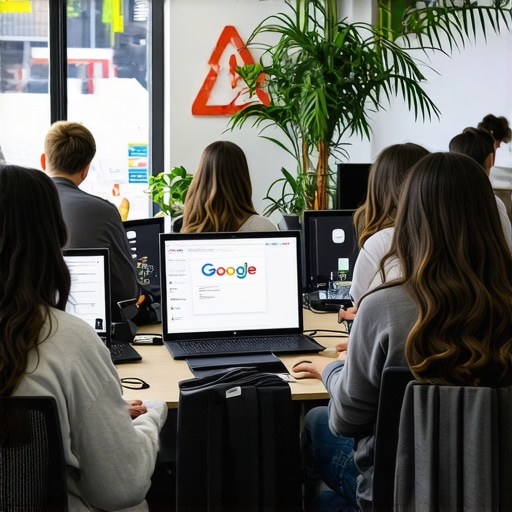
The smell of wet concrete often greets me when I walk into a storefront audit, but the data I find inside those walls tells a much grittier story. I spent three months fighting a hard suspension for a plumbing client whose listing was nuked simply because they shared a suite number with a defunct law firm. Google did not want proof of a van; they wanted proof of a utility bill under the exact GPS pin, a feat nearly impossible when your lease is a month-to-month membership at a trendy downtown workspace. This is the reality of the hyper-local layer where a single mismatched coordinate can erase a decade of reputation. Maps do not see a community; they see a spatial database where proximity is the only currency. If your business lives in a shared workspace, you are playing a high-stakes game of mathematical salience with a centroid that does not care about your brand. This forensic trace of a service area polygon often leads to a filter that hides your visibility entirely.
The ghost in the GPS coordinates
Shared workspaces and coworking addresses create a high risk of GMB suspension because multiple entities compete for a single physical latitude and longitude. This conflict triggers the Google Business Profile filter for duplicated locations, which prioritizes the most established listing while hiding secondary participants from the map pack results. The algorithm treats the centroid of a coworking building as a single point of truth. When twenty different businesses claim that same point, the trust score for each entity begins to erode. I have seen countless owners struggle with how we fixed a gmb profile flagged for a virtual office address only to find the problem was buried in the building’s historical data. The proximity engine calculates the distance between a user and the business pin, but when that pin is shared with fifty others, the relevance signals become noisy and unreliable. You must prove physical occupancy through permanent signage and staffed hours to survive this scrutiny.
Why your physical address is a liability
A coworking address becomes a ranking liability when Google cannot verify a distinct office space with a unique entrance and permanent signage. The automated verification loops often flag these locations as virtual offices, which are prohibited for most service categories unless you have a dedicated room and public-facing staff. Many agencies will tell you to simply add a suite number, but the algorithm is smart enough to recognize the address patterns of major coworking chains. We often see the the virtual office trap fixing gmb failures caused by coworking spaces becoming a permanent barrier to entry for new startups. The physics of the map pack require a clear distinction between entities. If your business cannot produce a lease agreement that shows a specific room number, you are likely to face a hard suspension that requires manual reinstatement from a human reviewer. This process is grueling and requires meticulous documentation of the workspace environment. I once spent weeks collecting photos of floor-to-ceiling walls just to prove a client was not just a desk in an open-plan lounge.
“Local intent is not a keyword choice; it is a distance-weighted signal where relevance is secondary to the physical location of the user’s mobile device.” – Map Search Fundamental
Local Authority Reading List
- Escaping the virtual office trap for GMB verification
- A no nonsense local seo toolkit for every gmb owner
- Recovering from a banned GMB listing without the stress
- The exact steps to recover a disabled google business profile
- Cleaning up toxic business listings without losing your mind
The three mile radius that determines your revenue
Google Maps rankings are heavily influenced by a narrow proximity radius where the user’s current location dictates which three businesses appear in the pack. For coworking spaces, this means you are competing against every other business in that building for the limited real estate of the local 3 pack. The behavioral zooming of the algorithm looks for signals like check-ins and photo uploads from real users at that specific coordinate. If the only data coming from your address is generic stock photos, you will lose the map pack battle. You need a specific local seo services to repair ranking after switching business model strategy if you have recently moved into a shared space. The mathematical weight of local review sentiment also plays a part here; if five businesses in the same building have negative reviews, the entire location might see a slight dip in trust signals. It is about building a wall of proof around your specific suite. This includes using the one tool that simplifies local citation audits to ensure every mention of your brand across the web points to your exact room number and not just the building lobby.
The filter that hides your business from the map
The Google local filter removes redundant listings from the search results to provide a better user experience, often hiding businesses that share a category and an address. If three personal injury lawyers are in the same coworking building, Google will likely only show one of them at a time based on the user’s proximity. This is why you need seo services to fix gmb profile stuck in filter for duplicated locations to differentiate your profile through unique attributes and secondary categories. You cannot just keyword stuff your name and hope for the best; that usually leads to a fixing the ranking drop after removing keywords from your name situation where you lose all visibility. Instead, focus on information gain by uploading unique images of your team working inside the space. The algorithm uses image metadata to verify that you are actually present. I have seen profiles jump three positions just by adding twenty high-quality, geotagged photos of the actual office entrance. It is a forensic game of providing more proof than your neighbors. Use tools to find gmb categories and keywords that your building mates are not using to carve out a niche that the filter will not touch.
“Google requires a permanent physical signage and the presence of staff during stated hours to qualify for a standard local listing in the shared workspace environment.” – GBP Merchant Guidelines
Tactical repair for a coworking ranking drop
Repairing a ranking drop caused by a coworking address requires a full audit of your NAP consistency and a manual verification of your physical presence. You must start by cleaning up ghost citations left by previous agencies who might have used the building’s general address without a suite number. You can find help with how to wipe out ghost citations left by previous agencies to clear the path for a new, cleaner signal. If you have changed your business model recently, you might need why your search ranking tanked after changing your business model analysis to see if your new category is more sensitive to virtual office flags. The recovery process involves providing a video walk-through of the space, showing the street sign, the building entrance, and your locked office door with your logo on it. This is the only way to satisfy the reinstatement team. Once you are back, use the only tools you need to monitor your gmb health daily to ensure no other business in the building tries to claim your data or report you as a duplicate. It is a constant battle for spatial dominance that requires an investigator’s eye and a technician’s precision.