
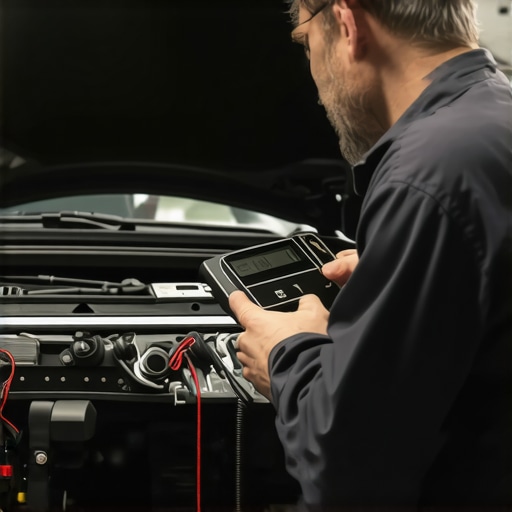
How to Capture Local Leads for Complex Car Electrical System Repairs
If you are running an auto repair shop, you know that not all tickets are created equal. While oil changes and tire rotations keep the lights on, they are often low-margin, high-volume tasks that leave your technicians exhausted and your bottom line stagnant. To truly scale, you need the “holy grail” of automotive work: complex car electrical system repair. Whether it is a parasitic draw that kills a battery overnight, a faulty alternator, or a sophisticated ECU communication error, these jobs command high margins and carry a significant barrier to entry for the average DIYer or the “shade-tree” mechanic.
At Auto Mastery, my philosophy is built on a simple premise: fill your bays with high-converting, high-value work by positioning your shop as the undisputed local authority. Capturing these leads requires more than just a sign on the road; it requires a digital ecosystem that targets the right customer at the exact moment of their frustration. In this guide, I will show you how to dominate your local market and ensure that when a driver faces a complex electrical glitch, your auto repair shop is the only one they trust to solve it.
Why Electrical Leads are Different from Oil Changes
The psychology of a customer searching for car electrical system repair is fundamentally different from someone looking for a quick maintenance service. When a car won’t start or a dashboard lights up like a Christmas tree, the owner isn’t looking for the cheapest price – they are looking for an expert. They are stressed, potentially stranded, and fearful of a massive repair bill or a car that is no longer reliable. This “high-stakes” mindset creates an opportunity for specialized shops to win on expertise rather than price.
Contrast this with commoditized services like oil changes. In those cases, the customer is often price-shopping and looking for convenience. However, a complex diagnostic job allows you to demonstrate the true value of your auto repair center. Data points from across the industry suggest that shops focusing on high-level diagnostics build significantly more trust with their clientele. When you solve a problem that three other shops couldn’t find, you haven’t just earned a repair fee; you’ve secured a customer for life. This increase in Lifetime Customer Value (LTV) is the engine that drives sustainable growth for independent shops.
Furthermore, electrical repairs often lead to “discovered work.” A diagnostic for an alternator often reveals aged batteries or corroded terminals, allowing your service advisors to build comprehensive repair orders that ensure vehicle safety while maximizing the shop’s revenue per vehicle. To capture these leads, you must stop marketing yourself as a “generalist” and start appearing as a specialist in the eyes of Google and your local community.
Optimizing Your Google Business Profile for High-Value Repairs
Your Google Business Profile (GBP) is the front door of your digital auto repair center. If you want to capture leads for complex electrical work, you cannot simply list “auto repair” and hope for the best. You must be granular. Google’s algorithm uses a concept called “Proximity Authority,” which weights your shop’s relevance based on the specific services you list and the geographic location of the searcher.
First, ensure that “Electrical Repair” and “Alternator Repair” are explicitly added to your services list within your profile. Don’t stop there; use the “Description” section of your services to mention specific components like starters, fuses, and wiring harnesses. This tells Google’s bots that you are a specialized auto repair shop capable of handling more than just mechanical fixes. If you find your rankings are stagnant, you might be facing invisible hurdles. I recommend checking out The Only Tools You Need to Monitor Your GMB Health Daily to ensure your profile is performing at its peak.
Additionally, encourage customers who have had electrical work done to mention those specific keywords in their reviews. A review that says, “They fixed the electrical short in my truck that no one else could find,” is worth ten reviews that just say “Great service.” These keywords within reviews act as powerful local SEO signals, boosting your visibility for niche searches.
Capturing the “Near Me” Search for Specialized Services
One of the most common entry points for an electrical lead is actually through the HVAC system. Many drivers will search for auto ac repair near me when their air conditioning stops blowing cold. While this might seem like a mechanical or refrigerant issue, a significant portion of modern AC failures are rooted in electrical faults – blown relays, faulty pressure sensors, or failing climate control modules. By positioning your shop as an expert in auto ac repair near me, you open a “gateway” to higher-margin electrical diagnostics.
To dominate the “Near Me” search, you need to win the “Local 3-Pack.” This is the map section that appears at the top of Google search results. Unfortunately, many independent shops lose this prime real estate to large national chains that have massive SEO budgets. This is often because local shops fail to optimize for the specific local signals that Google looks for. If you are struggling to break into that top three, you should read our breakdown on Why Local Mechanics Lose the ‘Alignment Near Me’ Search to Chains to see how you can pivot your strategy.
Dominance in the 3-Pack requires a consistent NAP (Name, Address, Phone number) across the web and a steady stream of localized content. When you post updates to your GBP, share photos of your technicians using advanced diagnostic tools like oscilloscopes or high-end scanners. This visual proof reinforces your status as a high-tech facility.
Building Trust Through Technical Content and Diagnostics
In the world of auto service and repair, transparency is the ultimate currency. Complex electrical issues are often “invisible” to the customer, which can lead to skepticism when they receive a bill for three hours of diagnostic time. You can bridge this trust gap through technical content. Use your website and social media to share “mechanic life hacks” or simplified explanations of how a CAN bus system works. When a customer sees that you understand the “brain” of their vehicle, their anxiety decreases.
Research from industry leaders like Shopmonkey highlights that modern customers value digital communication. Offering “texted diagnostic links” that include photos of frayed wires or screenshots of error codes from your scanner can significantly increase your close rate on high-ticket repairs. Furthermore, offering convenience services like “pickup and delivery” can be the deciding factor for a busy professional whose car has an electrical gremlin. For a great example of how to present these specialized offerings, look at the auto service and repair landing pages of top-tier shops.
By providing educational content, you aren’t just selling a repair; you are selling peace of mind. This content also serves a dual purpose: it informs the customer and provides Google with a wealth of keyword-rich text to index, further improving your organic search rankings.
Technical SEO: Schema and Site Speed for Auto Shops
Your website needs to be as fast and precise as your diagnostic equipment. If a user clicks on your site while searching for car electrical system repair and the page takes five seconds to load, they will bounce back to the search results. This “bounce” tells Google that your site isn’t helpful, which will tank your rankings. Technical SEO is the backbone of your digital presence.
One of the most overlooked aspects of technical SEO for an auto repair shop is Schema Markup. This is a specialized code you add to your website to help search engines understand exactly what you do. For example, using “AutoRepair” schema allows you to define your service area, your hours, and the specific brands you service. If your schema is broken or missing, you are essentially invisible to certain parts of Google’s algorithm. For more on this, see Why Your Schema Errors Are Keeping You Out of the Local 3-Pack.
Properly implemented structured data ensures that when someone searches for a specific auto repair shop, your information – including your star rating and service highlights – appears clearly and professionally. This technical precision is what separates the shops that are “just getting by” from those that are dominating their local market.
Avoiding the “Ghost Citation” and Banned Listing Traps
In a desperate bid to rank higher, some shop owners fall for “black-hat” SEO tactics that can lead to their business being banned from Google Maps. One of the most common mistakes is using “virtual offices” to try and claim a presence in a nearby city where they don’t actually have a physical bay. Google’s AI is incredibly proficient at spotting these “ghost citations.” If you are caught, your listing can be suspended, cutting off your primary lead source overnight.
Another common trap is keyword-stuffing your business name. If your legal name is “Main Street Auto,” but you list yourself as “Main Street Auto – Car Electrical System Repair & Alternator Replacement,” you are violating Google’s terms of service. While it might give you a temporary boost, it’s a ticking time bomb. Instead, focus on legitimate management strategies. For those operating multiple locations or mobile diagnostic units, understanding The GMB Management Secrets for Service Area Businesses is essential to staying in Google’s good graces.
If you find your rankings aren’t moving despite your best efforts, it might not be what you are doing, but how you are doing it. Often, a “Map Pack” stall is caused by inconsistent data across the web. You can learn more about troubleshooting this in our guide on Why Your Map Pack Position Isn’t Moving Despite All Your Work.
Conclusion & Action Plan
Capturing local leads for complex electrical repairs is not about luck; it’s about building a system that demonstrates authority and builds trust. By focusing on high-margin work like car electrical system repair, you can transform your shop from a general service center into a specialized powerhouse. The path to “Auto Mastery” involves a three-pronged approach: optimizing your Google Business Profile for specific high-value services, creating technical content that proves your expertise, and maintaining a flawless technical SEO foundation.
Your Action Plan:
- Audit your GBP services and add specific electrical components.
- Update your website to include dedicated pages for alternator, battery, and diagnostic services.
- Implement digital diagnostic tools to share visual proof with your customers.
- Monitor your local search health weekly using the right SEO tools.
If you’re ready to stop chasing low-margin oil changes and start filling your bays with complex, high-profit work, follow me, Christian Mosley, on LinkedIn for more daily tips on scaling your auto repair business. Let’s get your shop to the top of the search results and keep your technicians busy with the work that matters.