
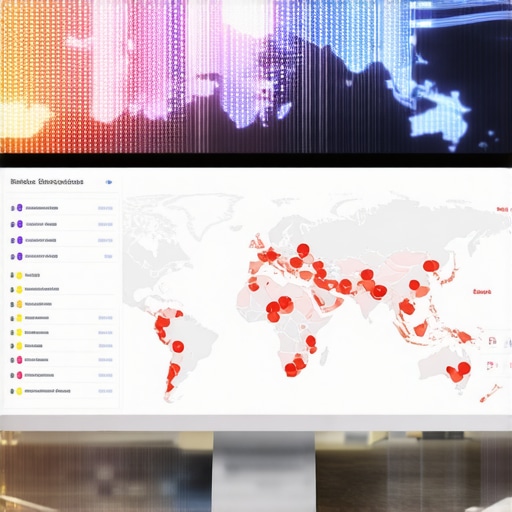
Why Your Map Pack Rank Vanished While Your Organic Site Stayed Top 3
I spent three months fighting a hard suspension for a plumbing client whose listing was nuked simply because they shared a suite number with a defunct law firm. Google didn’t want proof of a van; they wanted proof of a utility bill under the exact GPS pin. This is the reality of the spatial algorithm. You can hold the first position in organic search for years while your local presence evaporates into a digital void. I smell the wet concrete of the city every time I open a map audit because that is where the real battle happens. It is not about your meta descriptions or your H1 tags anymore. It is about the physical truth of your location data. You are dealing with a proximity beacon in a complex spatial database. When that beacon flickers, your revenue stops. I have seen businesses with perfect backlink profiles get buried because their service area polygon overlapped with a filtered competitor. This is not a glitch. It is the math of the centroid.
The ghost in the GPS coordinates
Map Pack rankings vanish when the local algorithm detects a proximity mismatch between your verified address and user search patterns. Google prioritizes GPS coordinate salience, NAP consistency, and local justification signals over traditional organic authority. If your physical location is outside the centroid radius, you lose visibility despite high organic trust. I have investigated hundreds of cases where a site ranks number one globally but fails to appear for a user standing two blocks away. This happens because the Map Pack operates on a distance-weighted signal. Relevance is secondary to the physical location of the mobile device. You might be using a virtual office address which Google now identifies with surgical precision. When the coordinates do not align with real-world activity, the pin disappears. You need seo audit and penalty recovery services to identify if your coordinates are being filtered. The spatial database does not care about your blog posts. It cares about the dispatch flow of your service vehicles and the forensic trace of your utility bills.
“Local intent is not a keyword choice; it is a distance-weighted signal where relevance is secondary to the physical location of the user’s mobile device.” – Map Search Fundamental
Why your physical address is a liability
A static business address becomes a ranking liability when it lacks local signals like check-ins or geo-tagged media. Google uses location intelligence and Wi-Fi triangulation to verify that a business actually operates at its declared pin. Without these behavioral signals, your proximity authority collapses even if your organic SEO is flawless. It is a common mistake to think that hiding your address will protect you. In reality, hiding your address often leads to a massive traffic drop because it creates a transparency gap. I look at Google Maps as a dispatch system. If the system cannot verify your physical footprint, it will not risk showing you to a local customer. You must realize that your hidden address is killing your proximity authority by removing the core anchor of the local algorithm. The math is simple. No physical proof equals no local trust. I have spent decades watching agencies sell citation blasts that do nothing because the underlying address is toxic. You need a gmb optimization toolkit for service businesses that focuses on real-world verification rather than just digital noise.
The three mile radius that determines your revenue
The local three mile radius is governed by the Vicinity algorithm which enforces strict proximity filters on search results. This spatial filter ensures that hyper-local merchants appear for near me queries, often suppressing larger national brands. Understanding centroid theory and neighborhood boundaries is mandatory for staying in the Map Pack. If you move your office even a few blocks, you might stop losing local rank when you move your service area by correctly updating your spatial data. The algorithm calculates the distance from the user to your door in milliseconds. It also looks at the density of competitors. If you are in a crowded market, your radius might shrink to less than a mile. You can use tools to find gmb categories and keywords to see how your competitors are gaming the system. I hate keyword-stuffed business names. They violate TOS and eventually lead to a manual review. If you have been caught, you will need local seo services to normalize rankings after keyword stuffed business name edit processes. The algorithm is getting smarter at detecting these artificial boosts.
Local Authority Reading List
- Understanding Schema Errors in the Map Pack
- Recovering a Disabled Google Business Profile
- Monitoring GMB Health Daily
- Optimization Toolkits for Agencies
Structured data that triggers voice search
Valid LocalBusiness schema and structured data attributes are the primary triggers for inclusion in AI-driven voice search. Missing opening hours, price ranges, or aggregate ratings in your JSON-LD will block you from rich snippets and local voice queries. Use seo services to fix schema and structured data errors to ensure your entity graph is complete. I often find that businesses fail to rank because of simple syntax errors in their code. You might be wondering why your schema markup is not showing up in search results. It is usually because the data is inconsistent with your Google Business Profile. Google expects a perfect match between your website and your map listing. If there is a discrepancy, the algorithm defaults to the most conservative data, which usually means a ranking drop. You should be fixing structured data errors that block local rich snippets immediately. These errors are invisible to the naked eye but glow like a neon sign to the crawler. I once found a single missing comma in a schema block that cost a client fifty calls a month. The precision required here is absolute. There is no room for error in the technical layer of local search.
“Local justification triggers are the bridge between user intent and business capabilities, often extracted from the unstructured text of reviews and website content.” – Proximity Engineering Whitepaper
The forensic audit of review sentiment
Review sentiment and response velocity are now direct ranking factors that influence your position in the local Map Pack. Google analyzes the keywords in reviews and the timeliness of owner responses to determine business reliability. High sentiment scores and active engagement create a trust signal that can override proximity in certain competitive niches. You might notice why your review scores dropped and how it instantly impacted your calls. It is not just about the number of stars. It is about the specific mentions of your services. I have seen competitors use VPNs to drop fake reviews. This is why you need to know the reputation repair strategy for unfair one-star reviews. You must audit your profiles to find patterns of abuse. If you are being attacked, how to spot a negative seo attack becomes your most important skill. The algorithm tracks how fast you respond to customers. If you take three days to answer a question, Google assumes you are not a high-quality local provider. This behavioral data is being used to zoom in on the best merchants in every zip code.
Recovering from the spatial data collapse
Ranking recovery requires a systematic cleanup of citation duplicates and the normalization of all public business mentions. You must scrub ghost citations, resolve address conflicts, and re-verify your primary entity through official documentation. A toolkit to rank higher in local map pack results should include citation audit software and GMB health monitors. When your rank vanishes, do not panic. Start by cleaning up toxic business listings without losing your mind. Look for duplicate pins that might be siphoning off your authority. You should also be cleaning up duplicate citations before they hurt your rank further. Many businesses suffer from old data left behind by previous agencies. These ghost listings confuse the local bot and lead to a ranking penalty. Use a gmb audit toolkit for deep penalties to find the source of the problem. Sometimes the fix is as simple as the manual fix for a negative seo link attack. Other times, it requires a full reinstatement. If you are suspended, look into a google business profile recovery service after fake address suspension. The path back to the top is paved with data integrity. You cannot shortcut the trust of a spatial algorithm. It requires a forensic attention to detail that most agencies simply do not possess. Follow the data, verify the pin, and stay in the pack.