
The Simple Fix for Getting Your Reading Sports Massage Clinic into the Local 3-Pack
For a wellness practitioner in Berkshire, the digital landscape can often feel as congested as the IDR during rush hour. You offer world-class therapy, your clinical outcomes are exceptional, yet when a potential client searches for Reading sports massage, your clinic is nowhere to be found. Instead, the “Local 3-Pack” – that coveted trio of map results at the top of Google – is dominated by competitors who might not even have your level of expertise.
The Local 3-Pack is the undisputed “digital front door” for local health services. It is where the vast majority of “near me” intent ends in a click or a phone call. If you aren’t in those top three spots, you are effectively invisible to the hundreds of residents in Caversham, Tilehurst, and Woodley searching for relief from sports injuries every month. As a digital strategist, I often remind clinic owners that SEO is the slowest lead channel to start, but it is undoubtedly the cheapest once it matures. The goal isn’t just to rank; it’s to build a sustainable patient pipeline that doesn’t rely on the ever-increasing costs of paid social or PPC.
In this guide, we will break down the “simple fix” that moves the needle for clinics in Reading, moving beyond basic tactics to the high-level technical and reputational signals that Google’s 2026 algorithms demand.
The “Simple Fix”: Category & Service Optimization
One of the most common reasons a clinic fails to appear in the 3-Pack is a fundamental misunderstanding of GMB (Google Business Profile) categories. Google uses your primary category as the strongest signal of what your business actually is. If you are a multi-disciplinary clinic, choosing between “Massage Therapist,” “Physical Therapy Clinic,” or “Wellness Center” isn’t just an administrative choice – it’s a ranking decision.
The “simple fix” often involves auditing your primary and secondary categories to match local search volume. For many of my clients, we find that while they identify primarily as an osteopath or chiropractor, the search volume for sports massage near me is significantly higher. If your primary category is set to “Chiropractor,” Google may prioritize you for those specific queries, but you might miss out on the broader “sports massage” traffic. To capture the widest net, you must ensure that Chiropractor Near Me is supported by secondary categories like “Massage Therapist” or “Sports Medicine Clinic.”
Furthermore, don’t ignore the “Services” section within your profile. This is where you can explicitly list “Deep Tissue Massage,” “Injury Rehabilitation,” and “Trigger Point Therapy.” By populating these with localized descriptions, you provide the semantic context Google needs to associate your Reading clinic with the specific needs of the local athletic community, from marathon runners training for the Reading Half to weekend warriors at local CrossFit boxes.
The Technical Backbone: Schema Markup & Website Structure
While your Google Business Profile is the face of your local presence, your website is the engine. Many practitioners find that their rankings stall because of a disconnect between their site and their map listing. This is where technical SEO becomes non-negotiable. Google’s algorithms, and increasingly AI-powered search engines like ChatGPT and Perplexity, look for a 1:1 match between your website’s data and your GBP.
This is why Why Your Schema Errors Are Keeping You Out of the Local 3-Pack is a critical read for any clinic owner. Local Business Schema is a specific type of structured data code that tells search engines exactly where you are, what hours you operate, and what services you provide. If your website says you are open until 8:00 PM but your GBP says 7:00 PM, or if your address formatting varies slightly, Google perceives a lack of “data integrity” and may suppress your ranking in favor of a more consistent competitor.
In 2026, website structure must also be optimized for “Neighboring Town” authority. If your clinic is based in the town center, you likely want to attract clients from Earley or Calcot. This requires a sophisticated approach to The Strategy for Ranking Service Pages in Neighboring Towns Naturally. Instead of creating thin “doorway pages,” you should build resource-heavy content that connects your services to those specific areas, perhaps by mentioning local sports clubs like Reading FC or the local rowing clubs along the Thames.
If your current site feels disorganized, it’s worth investigating Why Your Website Structure is Confusing Google Maps Algorithms. A clean, hierarchical structure allows Google’s crawlers to easily associate your Reading sports massage service page with your physical location.
Proximity & The “Hidden Address” Trap
Google’s primary goal in local search is relevance, and relevance is often dictated by proximity. However, many clinics in Reading fall into the “Hidden Address” trap. If you operate as a mobile therapist or have a “Service Area Business” (SAB) profile without a visible address, you are at a significant disadvantage compared to a clinic with a verified physical pin. For Reading Osteopaths, having a physical clinic location in a high-traffic area like Caversham or near the Oracle shopping center provides a massive boost in local authority.
If you are looking for a caversham massage, Google will prioritize the businesses physically located within that specific suburb. Proximity is the one factor you cannot easily change, but you can maximize your “reach” by ensuring your service area is correctly defined. Don’t simply select “Reading”; select specific postcodes like RG1, RG4, and RG10. This hyper-local targeting tells Google that your expertise extends specifically to these neighborhoods.
For clinics located near major business hubs, such as Green Park or the various business parks near the M4, proximity to corporate workers is a goldmine. These individuals often search for “massage near me” during lunch breaks or after work. Ensuring your pin is accurately placed and your “Directions” link is working perfectly is a small fix that can lead to a significant increase in foot traffic.
Reputation Management: More Than Just 5 Stars
Most clinic owners know they need reviews, but few understand the “Review Engine” mechanics that Google uses to rank the 3-Pack. It isn’t just about the quantity of stars; it’s about the velocity of new reviews and, crucially, your response time. A clinic with 50 reviews and a 100% response rate within 24 hours will often outrank a clinic with 100 reviews that never engages with its clients.
There is a direct correlation between engagement and ranking, which is why understanding Why Your Response Time to Reviews Impacts Your Map Ranking Directly is essential. When you respond to a review, you aren’t just thanking the client; you are sending a signal to Google that your business is active and managed.
To truly dominate the Reading market, your reviews should also contain “keywords in context.” When a client leaves a review saying, “The best sports massage near me in Reading,” Google’s NLP (Natural Language Processing) engines pick up on those terms. Encourage your regular patients to mention the specific treatment they received and the area they live in. This organic keyword integration is far more powerful than any back-end optimization you can do yourself. High-ranking clinics in the 2026 Global Sports Industry Outlook are those that treat reputation management as a core operational task, not an afterthought.
Visual Authority: Photos & Local Landmarks
Google’s Vision AI is incredibly sophisticated. It can “see” what is in the photos you upload to your Google Business Profile. If you only upload generic stock photos of candles and stones, you are wasting a prime optimization opportunity. To signal “hyper-locality,” you should upload high-quality photos of your staff and clinic that include recognizable Reading landmarks.
Taking a photo of your team outside the Reading Abbey Ruins, Forbury Gardens, or even near the Maiwand Lion provides Google with visual proof that you are an integral part of the local community. This is a subtle but effective way to How to Use Local Landmarks to Boost Your Authority in Search. It bridges the gap between being a generic “massage therapist” and a “Reading landmark” in your own right.
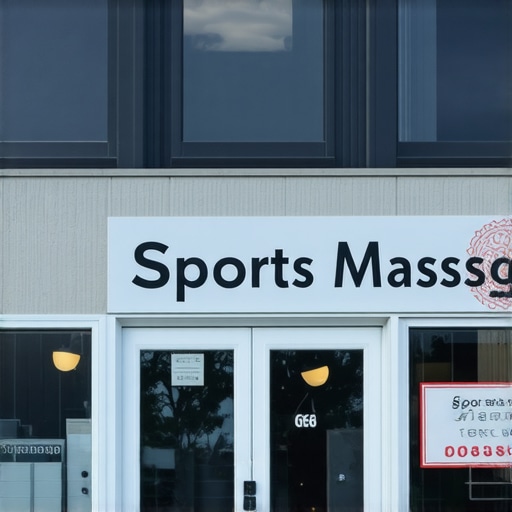
Furthermore, ensure you have photos of the exterior of your building and your signage. This helps patients find you (reducing “bounce” rates from people getting lost) and confirms to Google that your physical location is legitimate. In a world where AI-generated businesses are becoming a problem, these “Proof of Life” photos are vital for maintaining your spot in the 3-Pack.
Avoiding the “Penalty Box”: Keyword Stuffing & Toxic Links
In the rush to rank, many clinic owners are tempted by “black hat” tactics. The most common is keyword stuffing the business name. Changing your business name from “The Reading Wellness Clinic” to “Best sports massage reading – Injury Clinic” might provide a temporary boost, but it is a flagrant violation of Google’s Terms of Service. Eventually, a competitor will report you, or an algorithm update will catch you, leading to a manual suspension.
If you’ve already fallen into this trap, you need to focus on Normalizing Your Rank After Fixing a Keyword-Stuffed Business Name. It is possible to recover, but it requires a clean-up of your citations across the web to ensure your NAP (Name, Address, Phone Number) data is consistent everywhere. Consistency is the antidote to penalties.
Similarly, be wary of low-quality link-building services. Instead of buying 5,000 links from a random provider, focus on local community engagement. Support a local event, such as the growth initiatives of Infinity Fitness Reading CIC or community wellness days. These local mentions are far more valuable for your SEO than any “toxic” link from a foreign link farm. If you suspect your profile has been suppressed, consult The Audit Checklist for Fixing Manual Map Pack Penalties to identify and rectify the issue before your lead flow dries up entirely.
Conclusion & Action Plan
Dominating the Reading Local 3-Pack isn’t about one single trick; it’s about the cumulative effect of several “simple fixes.” By aligning your categories, fixing your technical schema, maintaining a rapid review response velocity, and proving your local relevance through visual signals, you create a profile that Google wants to show to its users.
The competitive landscape in Reading is only getting tougher. As we see in the 2026 Global Sports Industry Outlook, wellness brands are increasingly merging with healthcare, and the clinics that survive are those that own their local search space. Whether you are one of the many osteopaths in Reading or a specialist sports therapist, your digital authority is your most valuable asset.
Your Action Plan:
- Audit your GBP: Ensure your primary category is exactly what your customers are searching for.
- Check your Schema: Use a validator to ensure your website and GBP data match perfectly.
- Engage: Set a goal to respond to every new review within 12 hours.
- Go Local: Update your photos to include Reading landmarks and local community context.
If your clinic’s growth has plateaued, it’s time for a professional audit. The Local 3-Pack is waiting; make sure your clinic is the one occupying it.