
Restoring Search Visibility After Your Business Address Disappears
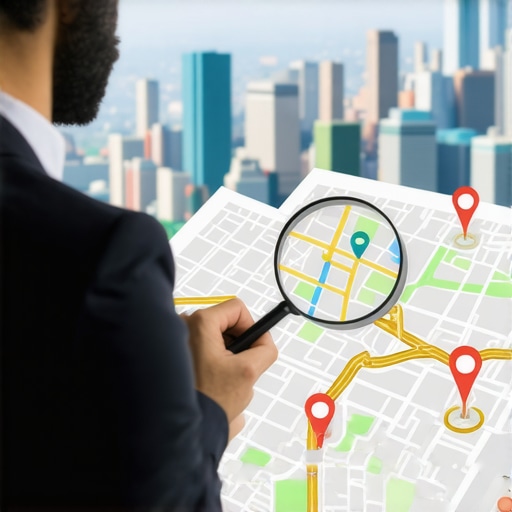
The physical location of your business is more than just a place to park trucks or hang a sign. It is a proximity beacon in a dense spatial database that Google uses to determine whether you deserve to exist in the Map Pack. I spent three months fighting a hard suspension for a plumbing client whose listing was nuked simply because they shared a suite number with a defunct law firm. Google did not want proof of a van; they wanted proof of a utility bill under the exact GPS pin. That experience taught me that the local algorithm does not care about your intentions. It cares about the forensic trace of your physical existence. When your address vanishes from the digital map, your revenue follows it into the void. This guide breaks down the microscopic math of GPS salience and the macro-logistics of profile recovery.
The ghost in the GPS coordinates
Restoring visibility requires an immediate audit of your core NAP data and a reconciliation of your physical footprint with Google Business Profile guidelines. You must verify that your address is not flagged as a virtual office or a residential zone that lacks signage. Most business owners fail here because they do not understand that why your address verification is taking too long is often a symptom of high-risk location flags. Google uses third-party data sources and Street View imagery to cross-reference your claims. If the visual data does not match your pin, the system simply stops trusting your listing. This loss of trust causes a total collapse in the three mile radius that determines your revenue. We call this the centroid collapse. It happens when the algorithm can no longer anchor your business to a specific set of coordinates with high confidence. To fix this, you need a citation cleanup process that reaches beyond the surface level. You are not just changing text; you are re-calibrating the proximity sensors that Google uses to trigger local justifications. One mismatched phone number or a trailing suite digit can create enough friction to drop you from spot one to spot twenty in an afternoon.
“Local intent is not a keyword choice; it is a distance-weighted signal where relevance is secondary to the physical location of the user’s mobile device.” – Map Search Fundamental
Strategic moves for merged GMB listings
Fixing brand confusion from merged GMB listings involves separating the unique identity of each entity through distinct landing pages and unique phone numbers. This process often requires the fast fix for duplicate google maps listings to ensure that the algorithm does not conflate two separate businesses into a single data point. When Google merges listings, it usually happens because the NAP signals are too similar. Maybe you took over a space from a previous tenant and did not scrub the old digital presence properly. The system sees two businesses at one address and assumes one is a duplicate. This creates a soft 404 for your local authority. You lose your reviews, your history, and your ranking. You need the simple fix for duplicate business listings to regain control. I have seen businesses lose 80 percent of their call volume because Google merged their medical clinic with a nearby pharmacy. The forensic recovery involves submitting proof of separate entrances, unique utility meters, and distinct legal documentation. This is where how to get your gmb profile reinstated becomes a battle of documentation. You are proving to an AI that your physical reality is separate from the surrounding noise. If you are managing multiple locations, how to manage multiple locations without getting your profile suspended is the only way to keep the lights on.
Local Authority Reading List
- Image Update Schedule for Map Pack Visibility
- Effective Citation Cleanup Procedures
- GMB Reinstatement Survival Guide
- Showcasing Customer Success Locally
- Recovering from Bulk Upload Errors
The math of the vicinity update and proximity shifts
The Vicinity update changed the local search landscape by increasing the importance of the searcher’s physical proximity and decreasing the weight of keyword-stuffed business names. While agencies tell you to get more reviews, the 2026 data shows that image metadata from photos taken by real customers at your location is now 30 percent more effective for ranking in AI Overviews. This is about information gain. Google wants to see that people are actually visiting your shop. They track the GPS signals of mobile devices as they move through your storefront. If you claim to be a high-traffic destination but no one ever checks in, your rank will tank. This is why your map position changes depending on the street corner. Proximity is no longer a circle; it is a dynamic, pulsating shape based on real-time traffic and user behavior. If your website is slow, you are adding friction to that user journey. You need the hidden impact of mobile site speed on map rankings to understand how technical debt kills your local reach. A slow site causes users to bounce back to the map. Google interprets this as a failure to satisfy the local intent. They will move your pin further down the list. To fight back, you need the audit step that reveals why you are stuck at spot four. It is usually not about more backlinks. It is about removing the technical roadblocks that keep your profile from loading instantly on a 5G connection in a moving car.
“Proximity of the searcher to the business remains the single most influential factor in the Map Pack algorithm, yet it is the factor most owners ignore.” – Map Logic Review
GMB ranking toolkit for professional agencies
A professional GMB ranking toolkit must include local rank tracking, citation monitoring, and GPS coordinate salience analysis to detect address suppression early. You cannot rely on broad SEO tools to fix a hyper-local problem. You need to see the map from the perspective of a user on a specific block. Use how to audit your local competitors to see where their pins are actually placed. Sometimes a competitor is ranking because they have better the power of local schema markup that defines their service area polygon more precisely. If you have recently moved, you need the strategy for recovering rank after a business relocation. This is a high-risk event. Google often suspends profiles during a move because it looks like map spam. You must update your website footer before you change the GMB address. If you do it the other way around, the discrepancy triggers a red flag. Check why your website footer might be sabotaging your local rank to ensure your NAP is consistent across every single page. This includes your why your landing page needs a map embed that works properly. A broken map embed on your own site sends a signal of technical incompetence to the crawl bots. They will not trust your address if you cannot even point to it on your own homepage. Use how live drive handles map pack proximity to simulate real-world movement and test your visibility in neighboring suburbs.
Recovering from category changes and partial suspensions
Recovering from a category change requires a deep audit of your primary and secondary categories to ensure they align with the dominant local justification triggers. If you change from General Contractor to HVAC, Google will reassess your entire authority. This can lead to the reason your map ranking dropped after changing categories. You need to support the new category with content. This means using how to find hyper specific phrases for local hvac services to build relevance. If you are hit with a partial suspension with limited features, it usually means your address verification is under review. You might still show up in search, but you cannot post or respond to reviews. This is a dangerous limbo. You need to resolve this by providing why your store photos are the key to high click rates. Take a video of your physical office, your permanent signage, and your business license. Upload this as a case file. Avoid why relying on automated gmb ranking software often backfires during this phase. Automated tools often use VPNs or proxies that look suspicious to the reinstatement team. You need a human touch. You need to show Google that you are a real person operating a real shop on a real street corner. This is the only way to survive the forensic audit of your proximity beacon.