
Meta Description: Discover why Live Drive outperforms basic CTR tools by simulating real-world GPS movement to overcome Google Maps proximity ranking barriers effectively.
How Live Drive Handles Map Pack Proximity Better Than Basic CTR Tools
In the current landscape of local search, proximity has become the “invisible wall” that most businesses struggle to scale. Since Google’s significant algorithm shift in late 2021, known as the Vicinity update, the distance between the searcher and the business location has become the primary ranking factor in the Map Pack. For many local SEO professionals, this created a massive problem: you could have the best reviews and the most optimized profile, but if a user was more than a mile or two away, you simply vanished from the results. This is the “Proximity Problem.” Traditional methods of optimization are no longer sufficient to bridge this gap. To truly expand your reach, you need more than just static signals; you need a sophisticated solution like Live Drive that mimics real-world user behavior to signal relevance beyond your immediate street corner.
The core of the issue lies in how Google perceives “intent.” If Google believes a user only wants the closest possible option, it will shrink the search radius. However, if you can prove to the algorithm that users are willing to travel from further away to reach your specific business, the “proximity bubble” begins to expand. While many try to solve this with a basic ctr manipulation tool, these often fall short because they lack the physical movement signals that Google’s mobile-first index now requires. Live Drive is designed specifically to address this by providing the high-level engagement signals that modern local SEO demands.
The Evolution of CTR Manipulation in Local SEO
To understand why modern tools are necessary, we must look at where we started. For years, the standard ctr manipulation tool operated on a very simple premise: more clicks equal higher rankings. Agencies would use bot farms or low-quality proxy services to search for a keyword and click on a specific Google Business Profile (GBP). In the early days, this worked remarkably well. Google’s algorithm was less sophisticated at identifying the “quality” of a click, and sheer volume was often enough to move the needle. However, as Google integrated more advanced machine learning and AI into its ranking systems, the “cheap traffic” era came to an abrupt end.
Today, Google’s AI filters out what it deems “low-quality clicks.” If a click comes from a known data center IP, lacks a browsing history, or doesn’t exhibit human-like behavior, it is ignored or, worse, can lead to a profile suspension. Research from groups like Semantic Mastery has shown that Google now looks for “behavioral clusters.” They aren’t just looking at the click; they are looking at what happened before the search and what happens after the click. Many SEOs are still stuck using outdated methods, which is How to Spot an SEO Agency Using Automation to Fake Results. If the data looks too perfect or lacks the messy, non-linear movement of a real human, Google’s fraud detection systems flag it immediately. This evolution has made it necessary to move toward tools that simulate the entire user journey, not just the final action of clicking a link.
Why Proximity is the “Final Boss” of Google Maps
Proximity is often referred to as the “Final Boss” of local SEO because it is the one factor that is physically tied to a geographic coordinate. You can change your website content, you can build more citations, and you can generate more reviews, but you cannot easily move your building. This creates the “Proximity Bubble.” It is the reason Why Your Map Position Changes Depending on the Street Corner. You might be the top-rated plumber in the city, but if the searcher is three blocks outside your “bubble,” Google will show a mediocre competitor who happens to be closer to the user’s current GPS coordinates.
Data consistently shows that proximity is weighted more heavily than almost any other factor in high-competition niches like legal, medical, or home services. Google’s goal is to provide the most “convenient” result. To break this, you must convince the algorithm that your business is a “destination.” If your business is a destination, proximity becomes less of a restrictive filter. This is where Why Your Service Radius is Secretly Killing Your Local Reach comes into play; if you aren’t actively signaling that you serve a wider area through user engagement data, Google will default to the smallest possible radius. Overcoming this requires a tool that doesn’t just “click” but “travels.”
What is Live Drive? (The Technical Difference)
Live Drive is not your average SEO software; it is a specialized feature within the Live Drive and seo tools for agencies ecosystem. While a standard ctr manipulation software might simply open a browser and click a button, Live Drive simulates a complete mobile GPS journey. This is a critical distinction in a world where over 60% of local searches occur on mobile devices. Google has access to the GPS data, accelerometer data, and even the Wi-Fi triangulation of the devices performing searches. If a “user” claims to be searching from a car but their GPS coordinate is static, Google knows it’s a bot.
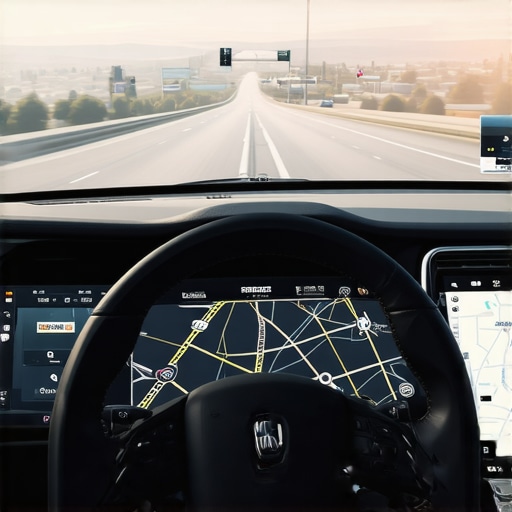
As a technical gmb ranking tool, Live Drive works by mimicking a user who opens Google Maps, types in a query, finds a specific business, and then requests “Driving Directions.” But it doesn’t stop there. It simulates the actual movement of that device along a roadway toward the destination. It uses real-world transit times, stops at traffic lights, and follows actual road networks. This creates a “Hyper-Local Relevance” signal. When Google sees multiple “devices” requesting directions and then physically moving toward a location from different parts of the city, it interprets this as high demand. This demand is the key to expanding the proximity bubble. It tells the algorithm that people are willing to bypass closer options to get to your business, which naturally forces Google to show your listing to a wider geographic audience.
The “Signal Stack”: Clicks vs. Driving Directions vs. GPS Movement
In the hierarchy of local SEO signals, not all engagements are created equal. We can think of this as the “Signal Stack.” At the bottom of the stack is the Basic Click. This has very low value because it is easily faked and occurs frequently by accident. Above that is the Search + Click, which shows intent but still lacks real-world commitment. The pinnacle of the stack is the Driving Direction Request + GPS Movement. This is the highest-value signal a local business can receive because it represents a physical intent to visit the premises.
When you use Live Drive, you are generating the most potent signal in the stack. By simulating the GPS movement, you are providing Google with the data it trusts most: physical location telemetry. This is much harder to spoof than a simple IP-based click. It involves coordinating device fingerprints, residential mobile proxies, and realistic movement patterns. This level of detail is why The Audit Step That Reveals Why You Are Stuck at Spot Four often points to a lack of “real-world” engagement. If your competitors have actual customers driving to them and you only have “clicks,” you will never win the proximity battle. Live Drive levels the playing field by providing the movement data that proves your business is a local authority.
- Basic Click: Low trust, high noise, easily filtered by Google’s AI.
- Search + Click: Demonstrates relevance but doesn’t overcome proximity filters.
- Directions Request: High intent, signals that the user considers the business a destination.
- GPS Movement: The “Gold Standard” signal that validates the intent and forces proximity expansion.
Integrating Live Drive into a Broader Agency Strategy
For professionals using seo tools for agencies, it is important to remember that tools like Live Drive should be part of a holistic strategy. While it is incredibly powerful for overcoming proximity, it works best when the “foundation” of the business is solid. This means your on-page SEO, your Schema markup, and your website structure must be in alignment. Many agencies fail because they try to use manipulation to cover up a broken foundation. For instance, Why Your Website Structure is Confusing Google Maps Algorithms is a common issue where the website doesn’t clearly define the service area, making it harder for Live Drive to “push” those signals through.
When we look at high-stakes industries, we see The Map Pack Secret for Law Firms and Local Medical Clinics: they focus on “Entity Authority.” By using Live Drive to simulate traffic from affluent or high-density neighborhoods toward a clinic or firm, an agency can effectively “claim” those territories in the Map Pack. The strategy should involve identifying the “blind spots” in a client’s heat map and then deploying Live Drive paths that originate from those specific areas. This targeted approach ensures that the proximity bubble expands in the directions that matter most for the business’s bottom line.
Strategic Implementation Steps:
- Baseline Audit: Use a geo-grid tool to see exactly where the proximity bubble ends.
- On-Page Alignment: Ensure local landing pages mention the neighborhoods you are targeting with Live Drive.
- Signal Deployment: Start Live Drive sequences from the edges of your current ranking zone to “push” the boundary outward.
- Monitor and Adjust: Watch for “ranking bleed,” where your top positions start to leak into neighboring zip codes.
Avoiding the Pitfalls of Automated Ranking Software
While the power of Live Drive is clear, users must be cautious of “cheap” alternatives. The market is flooded with low-cost bots that promise the world but deliver nothing but profile flags. Google is incredibly adept at detecting patterns. If 100 “users” all take the exact same path, at the exact same speed, from the exact same starting point, it doesn’t take a genius-level AI to realize it’s automated. This is Why Relying on Automated GMB Ranking Software Often Backfires.
True success with a ctr manipulation software requires randomness and sophisticated device emulation. Live Drive excels here because it incorporates “human” elements – varied speeds, different device types, and non-linear paths. It avoids the “footprints” that lead to algorithmic penalties. In local SEO, the goal is to look as natural as possible while being strategically artificial. If you use a tool that doesn’t respect these nuances, you aren’t just wasting money; you are risking the long-term viability of the Google Business Profile. Always prioritize quality of signal over quantity of clicks.
Conclusion: Breaking the Proximity Barrier
The “Vicinity” update changed the rules of the game, making proximity the dominant force in Google Maps. However, proximity is not an absolute law; it is a filter based on perceived user utility. By using Live Drive, SEO professionals can provide the specific, high-authority GPS and movement signals that Google uses to determine that utility. Unlike a basic ctr manipulation tool, Live Drive addresses the physical nature of local search, simulating the real-world behavior of customers who are willing to travel to find the best service.
If you are tired of being stuck at the “Spot Four” or seeing your rankings drop off just a few blocks from your office, it is time to move beyond simple clicks. Audit your current map presence, fix your underlying website structure, and consider integrating advanced movement-based signals into your strategy. The technology to overcome the proximity bubble exists – it’s just a matter of using the right seo tools for agencies to prove to Google that your business is the destination searchers are looking for. Visit seovipertools.com today to explore how Live Drive and their suite of tools can transform your local reach.