
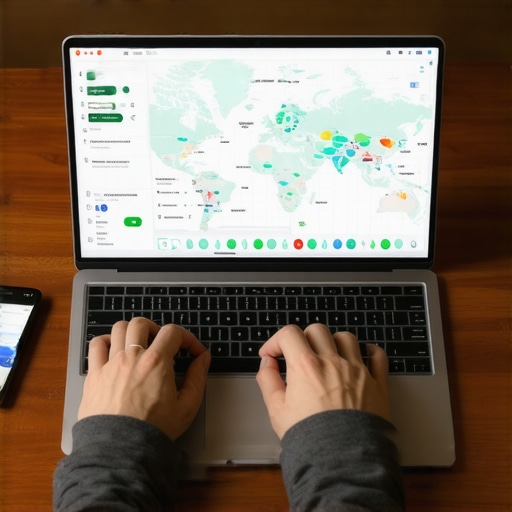
Why Your Map Ranking Varies So Much Between Desktop and Mobile
I view a Google Business Profile as a proximity beacon. My perspective comes from years managing logistics for service fleets. If a van is ten minutes late because of a bad map pin, that is a failure of data integrity. I have seen the same frustration in digital rankings. Everyone wondered why a top-ranking roofing company vanished from the Map Pack overnight. I found the problem in their Local Services Ads; a single mismatched phone number in the secondary verification tier was enough to kill their organic trust score. This centroid collapse happens because Google values the precision of the dispatch over the comfort of the desktop user. When you sit at a desk, your location is often tethered to an ISP hub miles away. When you are on a mobile device, your GPS coordinates are a hard signal. This discrepancy is the first step in understanding why your visibility fluctuates like a radio signal in a storm.
The ghost in the GPS coordinates
Mobile map rankings vary from desktop results because Google utilizes precise GPS and Wi-Fi triangulation on mobile devices versus broader IP-based location data on desktops. This creates a hyper-local proximity filter where the user’s specific street corner dictates the visibility of local businesses within the Google Map Pack environment. On a desktop computer, your location is typically determined by your Internet Service Provider. This often places you at a central exchange point which might be several miles from your actual desk. Mobile devices are different. They use a combination of GPS satellites, Wi-Fi MAC addresses, and cellular tower triangulation to pinpoint your location within a few meters. If you are trying to understand why your map position changes depending on the users block, you have to look at the math of proximity. The algorithm treats the mobile user as a moving target with immediate intent. If you are searching for a locksmith on a phone, Google assumes you are standing outside a locked door. The proximity weight is cranked to the maximum. On a desktop, the search might be for research, so Google allows for a wider geographic net. This is why you might rank first for your office in a desktop search but fifth when standing on the sidewalk across the street.
Why your physical address is a liability
Physical addresses become liabilities when they are located in high-density areas where proximity filters trigger aggressive deduplication of the Map Pack. Google prefers to show unique results, so businesses in the same building or within a few hundred feet often find themselves filtered out to ensure a diverse user experience. This is especially true for companies using a virtual office address which is a ticking time bomb for seo. When two businesses in the same category are located too close together, Google often picks the one with the higher local authority or the one closer to the geographic centroid of the city. This is why your desktop search might show you, but a mobile search from a nearby neighborhood hides you. The proximity radius on mobile is much tighter. It is a dispatch system, not a directory. If your competitors are closer to the user’s mobile ping, you lose. I have worked with agencies using best gmb ranking tools for local seo to map these dead zones. You can actually see the ranking drop off as you move block by block. To combat this, you must ensure your data is cleaner than your competitors. This includes using local seo services to fix nap inconsistencies. If your address varies by even a suite number across the web, the mobile algorithm loses trust in your coordinate accuracy.
“Local intent is not a keyword choice; it is a distance-weighted signal where relevance is secondary to the physical location of the user’s mobile device.” – Map Search Fundamental
The three mile radius that determines your revenue
The three mile radius is the primary conversion zone for most mobile local searches where proximity, review velocity, and real-time availability signals converge. Within this radius, Google prioritizes businesses that demonstrate high behavioral engagement such as frequent direction requests, click-to-calls, and high-resolution customer photos that prove the physical storefront exists. Mobile users behave differently than desktop users. They click the directions button more often. They look at photos while walking. This behavioral data feeds back into the algorithm. If you want to see a change, you should learn how we jumped 5 map spots just by updating our photos. High-quality, original images taken at the location carry metadata that confirms your business is real and active. This is a massive signal for mobile users. Desktop users might look at your website, but mobile users look at your profile. If your profile is stagnant, your mobile rank will suffer even if your desktop organic rank remains high. This disconnect is often why businesses see seo services to fix map pack loss while organic rankings stay stable as a necessity. Organic ranking is about the content of your site; map ranking is about the physical reality of your business presence.
Local Authority Reading List
- The manual check every local seo audit should include
- How to perform a 10-minute local seo audit on your own
- The hidden proximity tweak that puts your business in more map results
- How to fix map proximity issues for service area businesses
- The checklist for hiring a local seo agency that actually works
The hidden technical errors killing your local rank
Technical errors such as slow mobile load speeds, broken redirects, and unoptimized landing pages significantly degrade mobile map rankings despite stable desktop visibility. Google uses a mobile-first indexing approach, meaning the performance of your site on a smartphone directly influences your trustworthiness in the local Map Pack ecosystem. Many owners overlook seo services to fix slow website and technical issues because the site looks fine on a laptop. However, if your mobile site takes four seconds to load, Google will not promote your map listing to a user on a 5G connection. They want to provide the quickest path to a solution. Similarly, you might need seo services to fix broken redirects and 404 errors that specifically plague mobile users. If a user clicks from the Map Pack to your site and hits a dead link, that is a signal of a broken business. I despise when agencies ignore the plumbing of a site. A mobile user is impatient. If your technical foundation is crumbling, your map pin will follow. This is why you see a rank on desktop where the connection is stable, but your mobile rank vanishes as Google protects its users from a poor mobile experience.
Why your desktop is a static lie
Desktop search results are a static lie because they do not reflect the real-time movement and varied search intents of actual customers on the street. Desktop rankings are often influenced by historical browsing data and localized IP clusters that provide a skewed, overly optimistic view of a business’s true geographic reach. If you rely on desktop checks, you are seeing a version of the internet that is twenty years old. The reality is mobile. You should be using gmb ranking tools for agencies that simulate mobile pings from specific coordinates. This reveals the truth. You might think you are ranking in the whole city, but you are only ranking in a two-block radius around your office. This is often where you find the map pack proximity factor most small shops ignore. They think they are doing well because they check their rank while sitting in their own office. Of course you rank number one when you are sitting on top of the pin. You need to know how you rank from the coffee shop across town. Desktop results will never show you that variance. They are too anchored to a single point of entry.
“Proximity is the most powerful local ranking factor, yet it is the one business owners have the least control over without a rigorous technical data strategy.” – Local Search Intelligence Report
The forensic trace of service area polygons
Service area polygons in Google Business Profiles must be precisely configured to match actual service footprints or they risk being suppressed in mobile search results. Google cross-references your stated service area against real-world signals like the location of your reviewers and the areas where you are most frequently searched for by mobile users. If you are a plumber but your mobile rank is zero in the next town over, it is because your behavioral signals do not support your claims. You might need the tactic for ranking a service area business without a storefront to bridge this gap. This involves creating hyper-local content that mobile users actually interact with. If your map ranking drops every time you edit your address, it is a sign that the algorithm is re-verifying your physical presence. I once spent months fighting for a client whose listing was nuked because they shared a suite with a defunct firm. We had to provide proof of utility bills under a specific GPS pin. This level of forensic detail is what the mobile algorithm demands. It is not about keywords; it is about the proof of life for your business. If you have a legacy of bad data, you may need seo services to clean legacy black hat local seo footprints. Old, fake addresses or keyword-stuffed names will eventually trigger a mobile-only suppression as Google cleans its database of spam.
Fixing the map pack loss while organic stays stable
Fixing map pack loss while organic rankings remain stable requires a shift from content optimization to entity and proximity signal reinforcement. This involves auditing your Google Business Profile for category accuracy, review sentiment, and photo engagement while simultaneously ensuring your website’s local schema data matches your profile perfectly. Sometimes, a site redesign causes a map ranking drop because the NAP data was moved or hidden from mobile crawlers. You must be proactive. If you see your organic ranks are fine but your phone stops ringing, the map is the culprit. Use tools to fix low gmb rankings to identify where the trust signal broke. It could be as simple as an incorrect map pin. If your pin is in the middle of the street instead of on the building, mobile users will not get accurate directions. Google sees this failure and demotes you. You might also need seo services to clean up ai generated spam content penalties if your profile has been flooded with low-quality, automated updates. The mobile algorithm is increasingly sensitive to the quality of information. It wants real, human-verified data that leads to a successful transaction.