
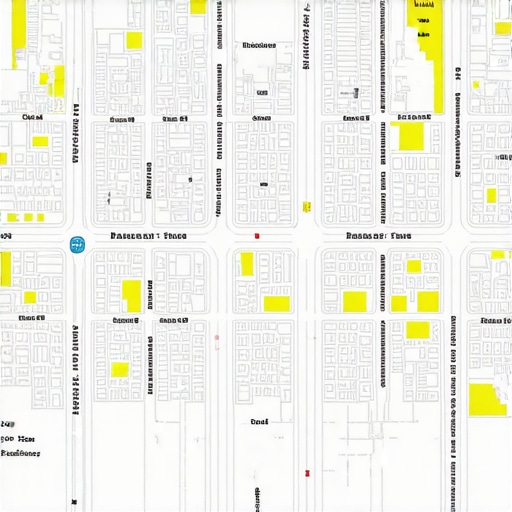
The air in my office smells like peppermint and old paper. I have sat in this chair for two decades watching the digital equivalent of national retail chains try to steamroll our local merchants with their massive budgets and generic content. They think they can buy their way into our neighborhoods. They are wrong. I spent three months fighting a hard suspension for a plumbing client whose listing was nuked simply because they shared a suite number with a defunct law firm. Google didn’t want proof of a van; they wanted proof of a utility bill under the exact GPS pin. This is the reality of the hyper-local layer. It is forensic. It is mathematical. It is a war over centimeters. National brands do not understand the math of the neighborhood. They target broad terms like best pizza while our local heroes win by targeting the specific corner where the traffic light stays red too long. The map pack is not a leaderboard; it is a proximity beacon spatial database. Success requires moving from the microscopic math of coordinate salience to the macro-logistics of service area bidding. You cannot win with a generic strategy. You win by understanding why a user on the south side of the park sees different results than a user on the north side.
The ghost in the GPS coordinates
GPS coordinate salience and hyper-local entity data are the primary drivers of Map Pack visibility. Google uses precise latitude and longitude markers to determine which business is physically closest to a user’s mobile device during a search event; this often ignores traditional keyword density in favor of physical proximity and behavioral signals. The algorithm is looking for a match between the user’s current polygon and your verified address. If you have a mismatched business address and phone number, the trust score collapses. I have seen businesses disappear because they formatted their suite number differently on three different directories. This is why services to fix mismatched business address and phone number are the first step in any real recovery. You are not just fixing text; you are aligning a digital signal to a physical point on the earth. If the signal is fuzzy, the ranking is gone. You must also consider how google maps showing the wrong business name can destroy your click-through rate even if you appear in the top three. The name is the anchor of the entity.
“Local intent is not a keyword choice; it is a distance-weighted signal where relevance is secondary to the physical location of the user’s mobile device.” – Map Search Fundamental
Why your physical address is a liability
Service area business polygons and physical address verification determine the outer limits of your ranking potential. Many businesses believe that a virtual office or a shared workspace is a shortcut to ranking in a high-traffic city center; however, Google views these as high-risk spam signals that often trigger immediate suspensions. This is exactly why your virtual office address is a ticking time bomb for seo and can lead to a permanent blacklisting. When you are fighting for the map pack, the algorithm checks the physical footprint of the building. It looks for other businesses at that same GPS point. If the density of businesses per square foot is too high, it assumes a mail drop. You need a legitimate physical presence to anchor your hyper-local keywords. I have worked with contractors who tried to hide their home address while serving a fifty-mile radius. They failed because they ignored how to fix map proximity issues through proper service area settings. You must define your territory not by what you want, but by where your service vehicles actually go. This is the spatial reality of modern search.
The three mile radius that determines your revenue
Proximity weighting and neighborhood-level search intent dictate the conversion rate of every click you receive. While national brands focus on high-volume keywords, local masters win by capturing the user who is three blocks away and ready to buy right now. This is the map pack proximity factor most small shops ignore because they are too busy chasing vanity metrics. You need to identify the specific neighborhood names that big agencies miss. I am talking about the names only locals use; the small park, the historic district, the shortcut through the industrial zone. Using these in your landing pages creates a relevance signal that a national chain cannot replicate. They are using automated tools that scrape data from a thousand miles away. You are using the language of the street. This is how you find hyper-local keywords that big agencies overlook every single time. It is about the specific friction points in your city. If you are a plumber, you don’t just want plumbing. You want the name of the neighborhood with the old copper pipes that always burst in January.
Local Authority Reading List
- How to hire an agency that understands local math
- Why your business hours are a ranking signal
- Choosing the right GMB primary category
- Reputation secrets for new shops
Forensic audit of the neighborhood intent
Hyper-local keyword research and behavioral intent mapping allow a small business to dominate the specific moments when a customer is closest to a purchase decision. You need a gmb keyword and category research toolkit that looks beyond search volume to find the intent behind the query. National brands focus on keywords with ten thousand searches a month. You should focus on the fifty keywords that result in a phone call within five minutes. This involves looking at search intent secrets for local service businesses that include urgency and location modifiers. When I audit a client, I look for the seo services to fix google ranking drop that were caused by generic content. If your page looks like it was written for a generic city in a generic state, Google will not rank it in our neighborhood pack. You need to prove you are here. Mention the local high school. Mention the bridge that is under construction. Mention the specific soil type in our valley. These are entity signals that confirm your physical relevance. This is the gmb vs local listing tools comparison that matters; does the tool understand our streets or just the data?
The math of local review sentiment
Review velocity and local sentiment analysis are the trust signals that Google uses to verify that your business is actually serving the community. If you suffer from a mass review removal, your rankings will tank because the algorithm loses its proof of life. You may need seo services to fix gmb rankings after mass review removal if a competitor has targeted you with fake reports. I remember a cafe owner who lost twenty reviews in an hour because a VPN-using bot attacked their profile. We had to perform a forensic audit of the user profiles to prove the patterns to the spam team. This is why fixing disappearing reviews is a technical process, not just a customer service one. You also need a gmb review and reputation management toolkit that helps you respond to every comment. Every response is a chance to use those hyper-local keywords. Don’t just say thanks. Say we were happy to help with your emergency in the historic downtown area near the courthouse. This anchors the review to a specific location signal. It turns a compliment into a ranking factor.
“Relevance in local search is not determined by how much you talk about a topic, but by how many people in a specific radius interact with your business for that topic.” – Map Search Fundamental
Precision tools for the map pack ecosystem
Technical GMB optimization and spam fighting protocols are the defensive measures required to maintain your position against low-quality competitors. You need to know when to use gmb spam fighting and review cleanup services to remove the ghost competition. These are the fake listings that use keyword-stuffed names to trick the algorithm. I have spent hours reporting listings that claim to be a business but are actually just a lead generation site for a national conglomerate. You must learn how to beat the ghost competition by documenting their lack of a physical storefront. This is where you might gmb ranking toolkit buy to gain the edge, but be careful of cheap tools that leave a digital footprint. You also need to address your toxic backlink profile if you have been using old-school SEO tactics. Seo services to fix toxic backlink profile focus on removing the low-quality directory links that no longer hold weight. Modern local SEO is about quality over quantity. One link from the local Chamber of Commerce is worth more than a thousand links from a generic blog in another country. This is how you fix mixed listings for multi location businesses as well; you treat every location as its own independent entity with its own local links.
The final shift toward behavioral zooming
User behavior signals and local justification triggers represent the next frontier of proximity engineering. Google is watching how people move. If twenty people a day use Google Maps to get directions to your shop, that is a stronger ranking signal than any backlink. This is why you must increase your calls and directions through better engagement. If your site is slow, you are losing these signals. You need to understand why site speed matters for local search more than national search; a mobile user on a street corner will not wait five seconds for your menu to load. They will click the next business in the pack. This is the brutal reality of the three-mile radius. You have seconds to prove your worth. If you have been seeing a google ranking drop, look at your mobile experience first. Look at your gmb insights for red flags. This is not about broad keywords anymore; it is about the physics of the local transaction. Our merchants are the backbone of this city. Don’t let a national chain with a flashy website and a disconnected call center take what is yours. Use the map. Use the street names. Use the truth of where you are.