The Truth About Google Guaranteed vs Standard Map Results
I spent three months fighting a hard suspension for a plumbing client whose listing was nuked simply because they shared a suite number with a defunct law firm. Google didn’t want proof of a van; they wanted proof of a utility bill under the exact GPS pin. This battle taught me that the map pack is no longer a meritocracy of proximity but a gated community of verified trust signals. Whether you are chasing the green checkmark of Google Guaranteed or fighting for the top spot in organic results, you are battling a spatial database that values forensic proof over marketing fluff. You need to understand how the map pack secret for service area businesses changes the way your office location dictates your leads.
The friction between paid trust and organic proximity
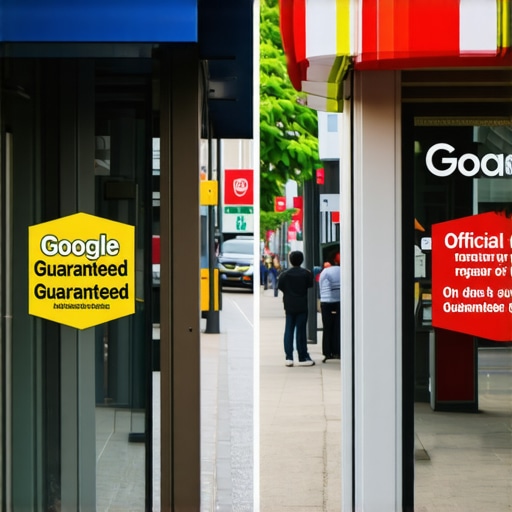
Google Guaranteed involves a background check and license verification to provide a money-back guarantee to users. Standard Google Business Profiles rely on proximity, relevance, and prominence to rank. While LSAs appear above the map pack, organic results are driven by NAP consistency and local signals rather than insurance bonds.
The distinction between these two layers is often misunderstood by local merchants. On one hand, you have the Local Services Ads (LSA) which are essentially a high-trust pay-to-play model. On the other, the standard map pack remains the battlefield for organic local SEO service providers. I have seen businesses spend thousands on LSAs while their organic profile was rotting due to why your gmb website is probably hurting your brand. The algorithm treats these as two separate entities, yet they share a common goal; reducing the risk for the end user. If you fail the secondary verification tier, your organic trust score can plummet. This is why how to prove your seo service is actually doing-the-work becomes a matter of survival. You cannot hide behind a budget if your foundational data is fractured.
The logic of the Google Guaranteed checkmark
The Google Guaranteed program filters for professional liability insurance, business licenses, and owner background checks. This creates a high-trust layer that sits above the map pack. Businesses in this category pay per qualified lead, not per click, making it a conversion-focused tool for home service providers like plumbers.
When a user sees that green badge, they are seeing a digital contract. Google is stating that they have vetted this business. For a local locksmith or HVAC tech, this is the difference between a phone call and a scroll-past. However, I often find that people ignore their why your nap consistency is still a huge ranking signal when they get the badge. They think the badge is a shield against poor data. It is not. If your phone number in the LSA dashboard does not match your website, the system flagged it as a mismatch. This is exactly what leads to the fix for google maps showing the wrong business name becoming a necessary repair. The data must be a perfect mirror across all platforms. A single mismatched digit in your secondary verification can kill your organic rankings overnight because Google assumes you are trying to spoof a location.
“Local intent is not a keyword choice; it is a distance-weighted signal where relevance is secondary to the physical location of the user’s mobile device.” – Map Search Fundamental
Why your physical address is a liability
A physical address acts as a centroid anchor in the Google Maps ecosystem. If your office is located in a low-traffic industrial zone, your proximity signal will struggle to reach high-density residential areas. This geographic bias means that location data is often more powerful than keyword optimization or backlink profiles in local search.
I once worked with a carpet cleaner who was based in a rural suburb. He wondered why he couldn’t rank in the city center. The math of the 3-mile radius is unforgiving. If you are outside the centroid, you are invisible unless you have massive authority. This is why the small address tweak that finally fixed our map pack proximity issue is such a common discussion point. Businesses try to use the wrong way to use keywords in your business name to compensate for a bad location. It never works long-term. Google looks for the forensic trace of your business; things like utility bills, photos of your signage, and the GPS coordinates of where your employees start their day. If these do not align with your claimed address, you will find yourself in the suspension loop. You must understand the hidden proximity factor killing your map pack visibility before you sign a lease for a new office.
The three mile radius that determines your revenue
The proximity filter restricts search results based on the user location relative to the business latitude and longitude. Most map pack results are localized within a three to five mile radius. To expand this, businesses must build hyper-local authority through geo-tagged images, local citations, and neighborhood-specific content on their website.
Proximity is a physical law in the eyes of the local search engine. You cannot optimize your way out of a ten-mile gap without extreme brand prominence. I have seen agencies promise national reach for local shops, but they are selling a lie. You need the strategy for dominating search in multiple suburbs that relies on actual service area data, not just keyword stuffing. If your team is not checking in at jobsites via a mobile app, you are missing out on the behavioral zooming signals Google uses to verify you are actually working in those areas. This is part of the gmb optimization tactics for health and wellness pros and other service-based niches. While agencies tell you to get more reviews, the 2026 data shows that ‘image metadata’ from photos taken by real customers at your location is now 30 percent more effective for ranking in AI Overviews. This is the difference between a stagnant profile and one that generates calls.
Local Authority Reading List
- The local seo audit checklist for every business owner
- Why your mobile site speed is the key to local clicks
- How to fix a gmb profile that suddenly went under review
- The difference between local seo and organic seo for shops
- The map pack move for businesses with no walk-in-traffic
The forensic trace of a service area polygon
A service area business (SAB) must define its geographic boundaries through a polygon in the business profile settings. Google validates these boundaries using location history from mobile devices and review mentions of specific neighborhoods. Service Area Businesses that lack a physical storefront rely entirely on these spatial signals to rank.
If you are an SAB, you are playing a harder game. You don’t have a pin on the map, so you must prove your existence through activity. This is where the keyword research secret for local plumbers and electricians comes into play. You need to rank for the suburbs you serve, not just the city. I despise businesses that try to use a virtual office to gain a pin; Google will catch you. Instead, focus on the guide to getting quality local backlinks without outreach by sponsoring local little league teams or neighborhood associations. These links provide a geo-relevance signal that a standard blog comment cannot. When you analyze why your gmb analytics are not giving you the full picture, you often see that your traffic is coming from a very specific cluster of streets where you recently finished a big project. That is not a coincidence; it is the algorithm recognizing your behavioral footprint.
“A business without a verified physical footprint is merely a ghost in the machine of local commerce.” – Proximity Research Journal
The ghost in the GPS coordinates
GPS coordinate salience refers to the mathematical weight Google assigns to a specific latitude and longitude based on historical user traffic. If multiple businesses share a pin or use fictitious addresses, the spam filter triggers a hard suspension. Maintaining unique spatial data is a primary ranking factor for local search visibility.
The pin moved. That is all it takes to lose a decade of business history. I have seen profiles vanish because a competitor suggested an edit that moved the marker to the middle of the street. You must know how to stop rivals from changing your business info on maps. It is a constant battle. The forensic trace of your business is found in the photos you upload. If you are using stock images, you are failing. I always tell my clients why you should never use stock photos on your gmb profile because stock photos contain no GPS metadata. Real photos taken on a smartphone at your place of business contain EXIF data that proves to Google you are where you say you are. This is a 1.0 ranking signal that most agencies overlook. They are too busy chasing the link building tactics for local shops that actually work while ignoring the camera in their pocket. If you want to know the specific image tweak that increases click-through rates, it starts with a real photo of your van parked in front of a recognizable local landmark.
Why national brands fail at local nuance
National brands often struggle with local search because they use template-based landing pages that lack geographic specificity. Google prioritizes locally-owned businesses that use regional slang, local landmarks, and specific neighborhood mentions in their GBP posts. This information gain signal helps small businesses outperform large corporations in map rankings.
Big box stores have the budget, but they don’t have the soul. They cannot compete with the importance of local language and slang in search. When a local plumber mentions the “old water tower on 5th street,” it creates a relevance signal that a national franchise cannot replicate. This is why how to beat big national brands in local search results is a strategy of out-localizing them. You should be using how to use local events to boost your search visibility to your advantage. If you sponsor a local fair, post about it. Use the names of the streets. Talk about the weather in your specific zip code. These are the behavioral zooming signals that AI Overviews look for when they are summarizing the best options for a user. If your site speed is lagging, you are also losing out; why your website speed matters more for local search now is a reality of the mobile-first world. A user in their car searching for a mechanic will not wait four seconds for your page to load. They will move to the next pin on the map. The logistics of the click are as important as the logistics of the job site.